




What's Happening?
President Bola Tinubu has lauded the Final Investment Decision (FID) of $800 million for the Ima Gas Project. This project, developed by Nigerian independent exploration and production company AMNI International in partnership with TotalEnergies, is anticipated
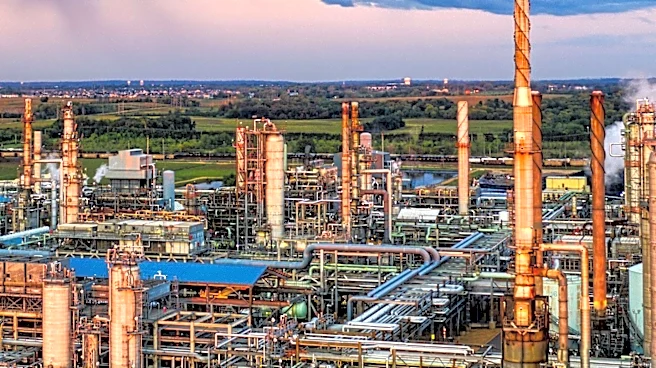
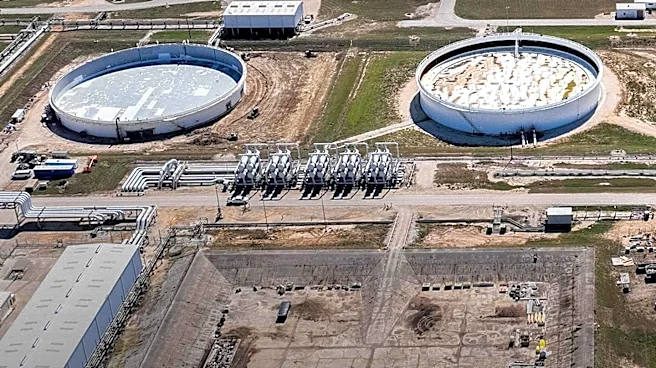
to produce approximately 300 million standard cubic feet of gas per day at its peak. The Ima gas resource, located offshore in Oil Mining Leases 112 and 117, was initially discovered in 1973 but remained undeveloped for over five decades. The FID is expected to facilitate the development of this resource, which has the potential to supply feedgas to Nigeria LNG Limited. This marks the fourth major gas project to reach FID since President Tinubu assumed office, following the Iseni, Ubeta, and HI projects. These initiatives are part of the Federal Government's broader strategy to attract investment into the gas sector and convert Nigeria's gas resources into productive assets, generating jobs, revenue, and economic opportunities.
Why It's Important?
This investment is crucial for Nigeria's economic development and industrialization efforts. By unlocking previously undeveloped gas resources, the project aims to create jobs, generate revenue, and foster economic growth. The long-dormant Ima Gas Project, discovered in 1973, represents a significant untapped potential that President Tinubu's administration is now moving to exploit. The focus on converting natural resources into productive assets aligns with the government's goal of supporting LNG exports, increasing foreign exchange earnings, providing feedstock for industries, enabling fertilizer and petrochemical production, and improving power supply. The project also highlights the growing involvement of Nigerian companies in the energy value chain, with AMNI International holding a majority interest and Nigerian financial institutions arranging a significant portion of the financing. This local participation is vital for building domestic capacity and ensuring that the benefits of these projects are retained within the country.
What's Next?
The Final Investment Decision on the Ima Gas Project is expected to pave the way for its development, with the resource having the potential to provide feedgas for Nigeria LNG Limited. The project anticipates that about 60% of its workforce will be sourced from host communities, including Bonny, Finima, and Andoni in Rivers State, indicating a direct impact on local employment. This development reflects the objectives of reforms introduced by President Tinubu's administration, led by Special Adviser on Energy, Olu Verheijen, which aim to improve fiscal competitiveness, reduce costs, and shorten contracting timelines in the oil and gas industry. The administration plans to continue its gas strategy, focusing on increasing gas production and utilizing these resources to power industries, expand exports, and create lasting prosperity for the Nigerian people. The success of this project could encourage further investments in Nigeria's energy sector.
Beyond the Headlines
The development of the Ima Gas Project underscores a broader shift in Nigeria's approach to its natural resources. For decades, Nigeria possessed vast gas reserves that remained largely undeveloped due to various fiscal and commercial challenges, despite the framework provided by the Petroleum Industry Act 2021. President Tinubu's administration is actively working to create a more predictable and competitive environment for investors, transforming potential resources into tangible economic opportunities. This initiative is not just about gas production but also about fostering a robust energy ecosystem that supports industrialization, job creation, and economic diversification. The emphasis on local content, with Nigerian companies and financial institutions playing significant roles, suggests a strategic effort to build indigenous capabilities and ensure that the economic benefits are widely distributed within the country. This long-term vision aims to leverage Nigeria's natural wealth to achieve sustainable national prosperity.