







What's Happening?
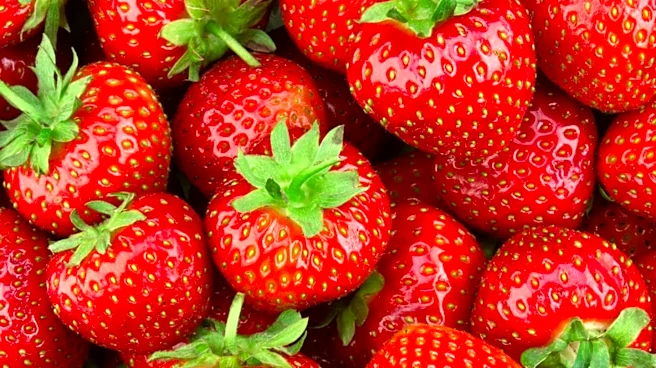
Driscoll's, a leading producer of berries, offers its strawberries year-round, with the peak season occurring from May through July. These strawberries are described as a high-quality, mass-produced variety, characterized by a firm body, mid-size, and
a juicy, sweet flavor. Driscoll's is recognized as the largest producer of strawberries in the United States and was among the first companies to brand its fruit and utilize special packaging. According to the California Strawberry Advisory Board, 90% of Americans consume strawberries, with an average annual consumption of 3.4 pounds of fresh strawberries and 1.8 pounds of frozen strawberries per person. Strawberries are highlighted for their nutritional value, being fat-free, sodium-free, cholesterol-free, and a good source of fiber, Vitamin C, and folate.
Why It's Important?
The year-round availability of Driscoll's strawberries significantly impacts the U.S. food market and consumer dietary habits. It ensures a consistent supply of fresh produce, contributing to the accessibility of healthy food options regardless of the season. This continuous availability supports the economic stability of the agricultural sector involved in berry production and distribution. For consumers, it means greater convenience and the ability to incorporate strawberries into their diet throughout the year, aligning with health recommendations for increased fruit and vegetable intake. The branding and specialized packaging pioneered by Driscoll's have also influenced marketing strategies within the fresh produce industry, emphasizing quality and consumer trust. The high consumption rates underscore the strawberry's importance in the American diet and its role in promoting healthier eating patterns.
What's Next?
The consistent demand for strawberries, driven by year-round availability, will likely encourage continued investment in agricultural technologies and practices that support extended growing seasons and efficient distribution. This could include advancements in greenhouse farming, controlled environment agriculture, and supply chain logistics to maintain freshness and quality. Other fruit producers may seek to emulate Driscoll's model of year-round availability and strong branding to capture market share. Research into new berry varieties that are more resilient or have enhanced nutritional profiles could also intensify. Furthermore, the emphasis on health benefits will likely continue to be a key marketing strategy, potentially leading to increased consumer education campaigns about the nutritional value of berries and other fresh produce.
Beyond the Headlines
The ability to provide strawberries year-round, largely through global sourcing and advanced agricultural techniques, reflects a broader transformation in the food supply chain. This shift has cultural implications, as seasonal eating traditions become less prominent, and consumers expect a wider variety of fresh produce at all times. Environmentally, year-round production can raise questions about the carbon footprint associated with long-distance transportation and energy-intensive growing methods, even as it reduces food waste. Ethically, it highlights the complex labor dynamics involved in large-scale agricultural operations. The success of branded produce like Driscoll's also signifies a move towards greater consumer trust in specific brands for fresh goods, rather than just generic commodities, influencing how food is marketed and perceived in the U.S.