





What's Happening?
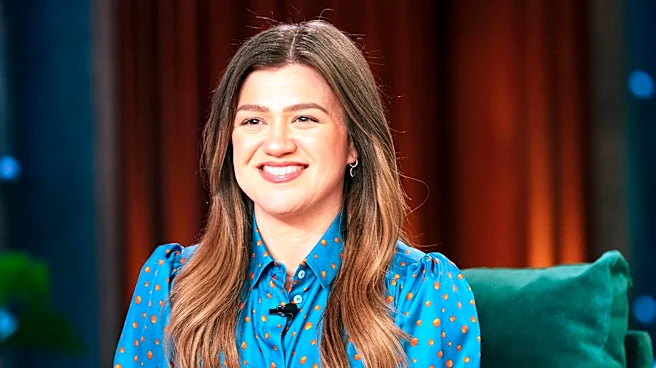
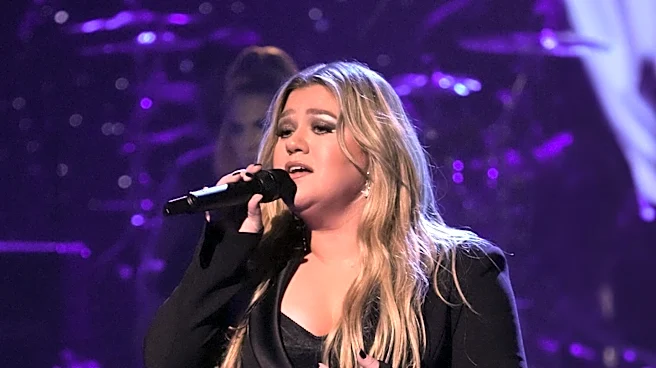
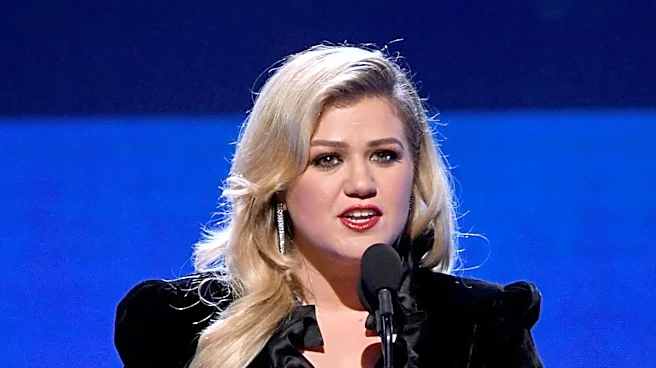
Kelly Clarkson has shared her 'controversial' perspective on artificial intelligence in music, stating her affection for AI's artistic potential but firmly believing that AI-generated music should not compete directly with human artists on mainstream
music charts. Speaking on the 'Las Culturistas' podcast, Clarkson expressed that while she finds AI 'really cool' and a 'fun field to play in' for creative exploration, she takes issue with AI artists appearing on the same charts as human creators. She suggested the establishment of a separate chart for AI-generated music, drawing an analogy to an Olympic competition where robots would not compete against humans. This stance comes as the music industry grapples with the rapid advancement of AI, with companies like Suno facing copyright lawsuits for allegedly training models on unlicensed works. Billboard, the music industry standard record chart in the U.S., has committed to increasing transparency around AI use in music, including identifying AI-generated songs on its charts and in editorial coverage.
Why It's Important?
Clarkson's comments highlight a growing tension within the U.S. music industry regarding the integration and regulation of AI. Her call for separate charts underscores a fundamental concern among many artists about fair competition and the preservation of human artistry in an increasingly AI-driven landscape. The debate over whether AI-generated music should be categorized distinctly impacts how success is measured, how royalties are distributed, and ultimately, the economic viability for human musicians. If AI music gains significant traction on mainstream charts without clear differentiation, it could devalue human creative efforts and potentially lead to a shift in consumer perception of what constitutes 'music.' The ongoing copyright lawsuits against AI music companies further emphasize the legal and ethical challenges that need to be addressed to protect intellectual property and ensure equitable practices for artists.
What's Next?
The music industry is likely to continue exploring mechanisms for distinguishing and categorizing AI-generated content. Billboard's commitment to transparency, including identifying AI-generated songs, is a step in this direction. Further discussions and potential policy developments may arise regarding the creation of separate charts or other forms of recognition for AI music, as suggested by Clarkson. Legal battles concerning copyright infringement by AI models are expected to proceed, potentially setting precedents for how AI is trained and how artists' works are protected. Stakeholders, including artists, record labels, streaming platforms, and technology companies, will need to collaborate to establish clear guidelines and frameworks that balance technological innovation with the rights and livelihoods of human creators. The evolution of AI music detection tools will also play a crucial role in implementing any new regulations or categorization systems.
Beyond the Headlines
The discussion surrounding AI in music extends beyond mere chart competition; it delves into profound questions about the definition of artistry, creativity, and human value in an age of advanced technology. Clarkson's perspective, while embracing AI's potential, emphasizes the irreplaceable element of human experience and emotion in artistic creation. The rise of AI-generated music challenges traditional notions of authorship and intellectual property, prompting a re-evaluation of existing legal frameworks. Furthermore, it raises ethical considerations about the potential for AI to mimic or even surpass human creativity, and how society will perceive and value such creations. The outcome of these debates could influence not only the music industry but also broader cultural and societal attitudes towards AI's role in creative fields, potentially leading to new forms of artistic expression and consumption, while also necessitating a redefinition of what it means to be a 'human artist.'