






What's Happening?
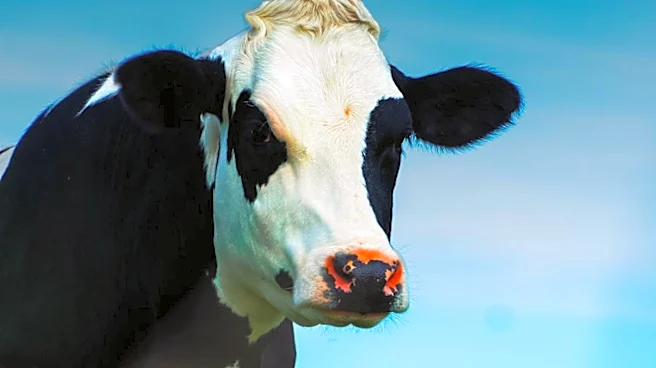
In the U.S. dairy industry, researchers including Steyn have documented a significant acceleration in the annual increase of genomic inbreeding in Holstein cattle. Between 2000 and 2008, the rate of increase was 0.11 percentage points per year, but this
accelerated to 0.36 percentage points annually between 2013 and 2021. This data, derived from CDCB records and published in the Journal of Dairy Science in 2022, indicates a growing concern for the genetic health and productivity of the Holstein breed. Studies show that while pedigree-based inbreeding measures often underestimate the problem, genomic measures reveal a higher and more accurate level of inbreeding, which directly correlates with reduced milk yield and other negative impacts. For instance, Italian Holstein studies found that genomic inbreeding cost 61 kg of milk per 1% increase, compared to 44 kg for pedigree inbreeding.
Why It's Important?
The accelerating rate of genomic inbreeding in U.S. Holstein cattle has significant implications for the dairy industry. Inbreeding depression leads to reduced milk production, decreased fertility, and increased susceptibility to diseases, directly impacting the profitability and sustainability of dairy farms. The discrepancy between pedigree and genomic inbreeding measures means that many farmers might be underestimating the true extent of the problem in their herds, potentially making mating decisions that exacerbate it. This issue affects not only individual farmers but also the genetic diversity of the entire Holstein breed, which is critical for long-term resilience and adaptability. The economic cost is substantial; a decade at the current U.S. inbreeding rate could cost a 12,000 kg herd 170 to 260 kg of milk per cow per lactation. Addressing this requires a shift towards more accurate genomic testing and strategic mating programs to manage genetic diversity effectively.
What's Next?
Dairy farmers and breeding programs in the U.S. are urged to adopt more sophisticated genetic management strategies. This includes utilizing genomic testing for females and basing mating decisions on genomic inbreeding coefficients rather than less accurate pedigree-based measures. The industry needs to prioritize increasing genetic diversity, potentially through the introduction of new bloodlines or crossbreeding programs, as seen in successful Nordic models. Suppliers of breeding stock are also being called upon to provide greater transparency regarding the origin and genetic diversity of their sires. Research continues into developing tools like Chromosomal Mating, which can optimize breeding to increase genetic gain while simultaneously reducing inbreeding. The long-term health and productivity of the U.S. dairy herd depend on proactive measures to counteract the current trend of accelerating genomic inbreeding.
Beyond the Headlines
The issue of genomic inbreeding in dairy cattle extends beyond immediate economic concerns, touching upon broader themes of agricultural sustainability and ethical animal breeding. The reliance on a narrow genetic pool, driven by the pursuit of specific desirable traits, creates a vulnerability that could have long-term ecological and economic consequences. This situation highlights the tension between maximizing short-term productivity and ensuring the long-term genetic health of livestock. It also raises questions about the role of technology, specifically genomic selection, in shaping agricultural practices. While genomics offers powerful tools for improvement, its application without careful consideration of genetic diversity can lead to unintended consequences. The challenge for the U.S. dairy industry is to balance genetic progress with the imperative to maintain robust and diverse animal populations, ensuring both profitability and the welfare of the animals for future generations.