





What's Happening?
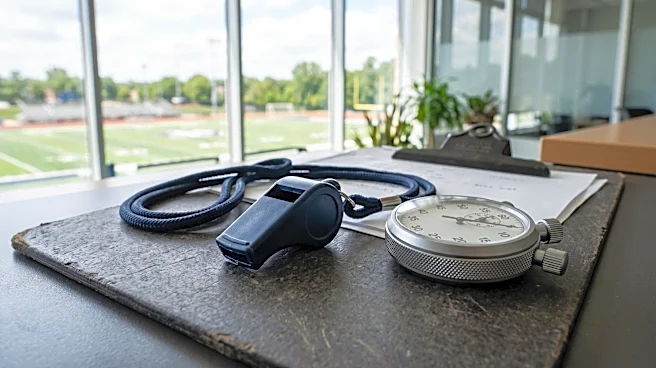
Brian Jines has concluded his twelfth year as the Director of Intramural and Club Sports at Columbia University. In this role, Jines is responsible for overseeing the university's intramural and club sports programs. His duties encompass securing facility
scheduling, coordinating travel for Club Sports teams, developing and implementing rules and guidelines for participants, and managing program budgets. Before joining Columbia University, Jines served for two years as the Assistant Director of Intramurals and Club Sports at Ferris State University in Big Rapids, Michigan, from 1999 to 2001. He holds a bachelor of science degree in Physical Education Teaching and Coaching from SUNY-Cortland, earned in 1997, and a master's degree in Health Education, obtained in 1999.
Why It's Important?
The long tenure of Brian Jines at Columbia University highlights the stability and consistent leadership within its collegiate sports administration. His role is crucial for the well-being and engagement of the student body, as intramural and club sports provide vital opportunities for physical activity, community building, and leadership development outside of varsity athletics. Effective management of these programs ensures that a wide range of students can participate in organized sports, fostering a healthy campus environment and promoting student retention. Jines's responsibilities, from scheduling facilities to managing budgets, directly impact the accessibility and quality of these programs, which are essential for student life and overall university experience. His experience and educational background in physical education underscore a commitment to student athletic development and welfare.
What's Next?
As Brian Jines continues in his role, the focus will likely remain on the ongoing development and enhancement of Columbia University's intramural and club sports offerings. This includes adapting programs to meet evolving student interests, ensuring equitable access to facilities, and maintaining robust safety protocols. Future initiatives might involve exploring new sports or activities, leveraging technology for better program management, or expanding outreach to increase student participation. His continued leadership will be instrumental in navigating any challenges related to resource allocation, facility availability, and compliance with university policies. The consistent oversight provided by Jines ensures that these non-varsity sports programs remain a vibrant and integral part of the Columbia student experience.
Beyond the Headlines
The sustained leadership in university sports programs, as exemplified by Brian Jines, reflects a broader commitment within higher education to holistic student development. Beyond academic pursuits, universities recognize the importance of physical activity and extracurricular engagement in shaping well-rounded individuals. Intramural and club sports, under experienced direction, contribute significantly to students' physical health, mental well-being, and social integration. These programs often serve as a training ground for future leaders, fostering teamwork, discipline, and organizational skills. The stability in such administrative roles allows for long-term strategic planning and the cultivation of a strong sports culture that benefits the entire university community, reinforcing the idea that education extends beyond the classroom.