





What's Happening?
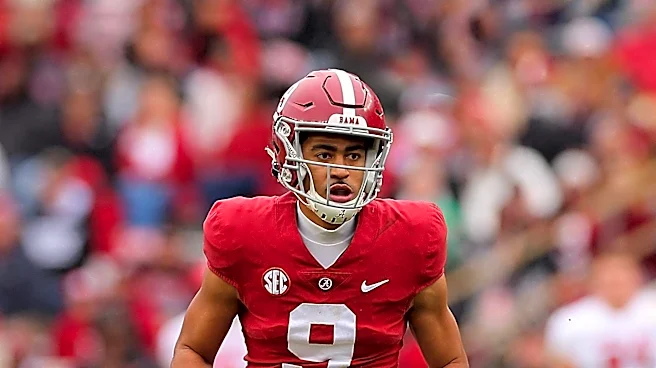
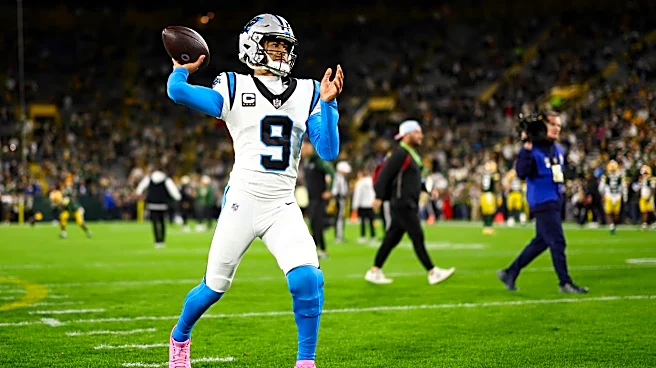
Ole Miss quarterback Trinidad Chambliss, a potential first-round pick in the 2027 NFL draft, may see his draft stock negatively affected by the recent struggles of Carolina Panthers quarterback Bryce Young. Former LSU national champion Breiden Fehoko
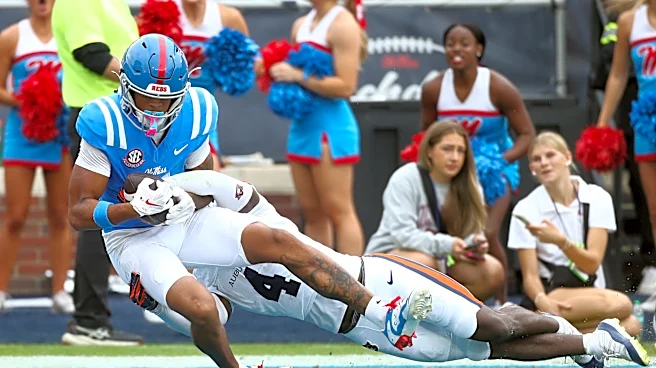
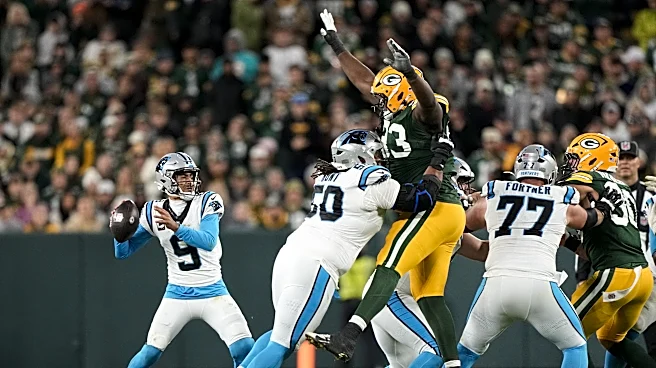
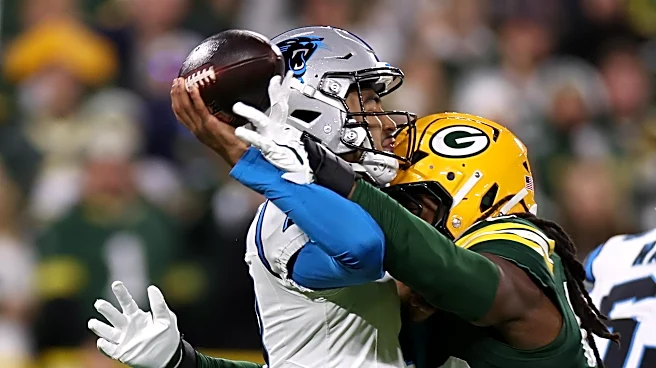
expressed this concern, noting the similar physical stature between Young (5-foot-10⅛, 204 pounds) and Chambliss (5-foot-11⅞, 208 pounds). Young has faced difficulties in recent games, including an interception and six sacks in a 27-19 loss to the Green Bay Packers. This has led to speculation that NFL teams might draw parallels between the two similarly sized prospects, potentially causing Chambliss to drop prematurely in the draft. Despite these concerns, ESPN NFL Draft analyst Mel Kiper Jr. has urged teams to overlook Chambliss's size, emphasizing his playmaking ability, mobility, and composure under pressure. Chambliss has had a strong season, leading Ole Miss to a 6-2 record and a College Football Playoff appearance last season, with recent performances including 263 passing yards, two touchdowns, and 65 rushing yards with a touchdown against Auburn.
Why It's Important?
The potential impact of Bryce Young's performance on Trinidad Chambliss's draft stock highlights a significant trend in NFL scouting: the influence of recent player outcomes on the evaluation of future prospects, particularly those with similar physical attributes. This situation underscores the inherent risk aversion among NFL teams, who often look for patterns and precedents when making high-stakes draft decisions. If teams become overly cautious due to Young's struggles, it could unfairly penalize Chambliss, despite his demonstrated talent and success at the collegiate level. This dynamic can lead to talented players being undervalued or overlooked, affecting their initial career trajectory and earning potential. For the NFL, it raises questions about the objectivity and long-term vision of scouting departments, as over-reliance on recent outcomes can lead to missed opportunities and perpetuate biases against certain player profiles, such as smaller quarterbacks. The debate also emphasizes the ongoing discussion about whether size should be a primary determinant of quarterback success in the modern NFL.
What's Next?
The immediate future for Trinidad Chambliss will involve continued strong performances for Ole Miss, especially in upcoming high-profile games, such as their next matchup against No. 2 Georgia. His ability to maintain his high level of play and demonstrate resilience under pressure will be crucial in counteracting any negative perceptions stemming from Bryce Young's struggles. NFL scouts and analysts will closely monitor Chambliss's game film, focusing on his decision-making, accuracy, mobility, and ability to perform against top competition. The narrative around Young's performance will also continue to evolve, and any improvements or sustained difficulties could further influence how teams view similarly built quarterbacks. For Chambliss, the challenge will be to consistently prove that his size does not limit his potential for success at the professional level, reinforcing the arguments made by analysts like Mel Kiper Jr. about his unique playmaking abilities.
Beyond the Headlines
This situation delves into the deeper psychological and analytical biases prevalent in professional sports scouting. The tendency to draw direct correlations between players based on superficial similarities, such as size, rather than a comprehensive evaluation of individual skill sets and situational factors, can lead to systemic undervaluation of certain archetypes. It reflects a broader challenge in talent assessment, where past failures of similar players can create a 'typecasting' effect, hindering objective evaluation. This also touches upon the evolving understanding of quarterback prototypes in the NFL; while traditional views favored larger quarterbacks, the success of players like Russell Wilson and Kyler Murray has challenged these norms. The debate around Chambliss's draft stock, influenced by Young, will serve as a litmus test for how much the league has truly embraced a more nuanced, skill-based evaluation over traditional physical metrics, especially for the most critical position in football. It highlights the ongoing tension between conventional wisdom and progressive scouting methodologies.