





What's Happening?
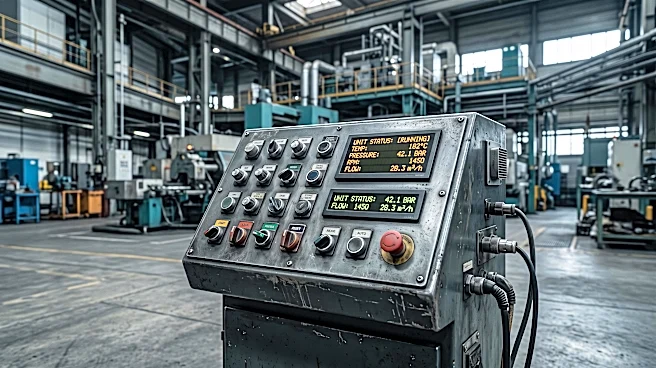
Procter & Gamble (P&G) is significantly increasing the number of its factories capable of running shifts without human intervention, aiming to boost productivity and save up to $10 billion. According to Luc Reynaert, chief product supply officer, P&G plans
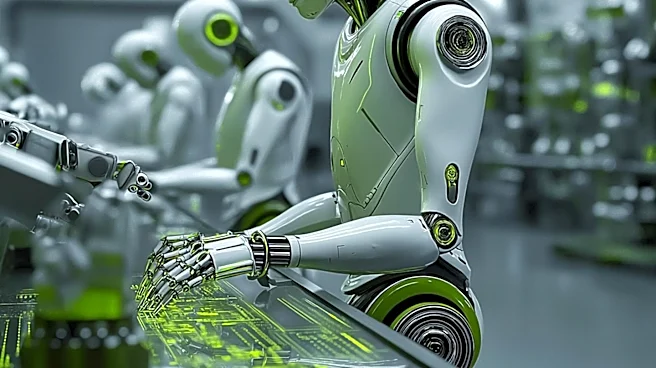
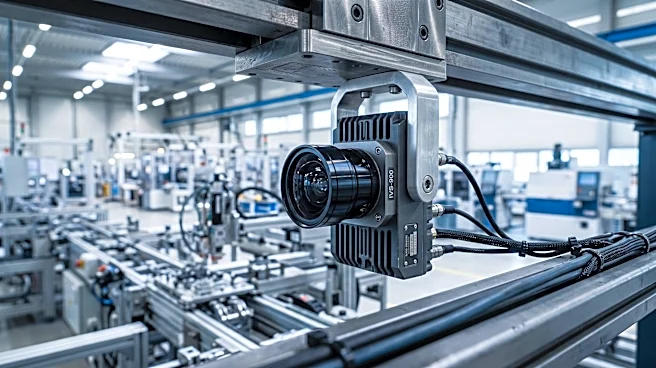
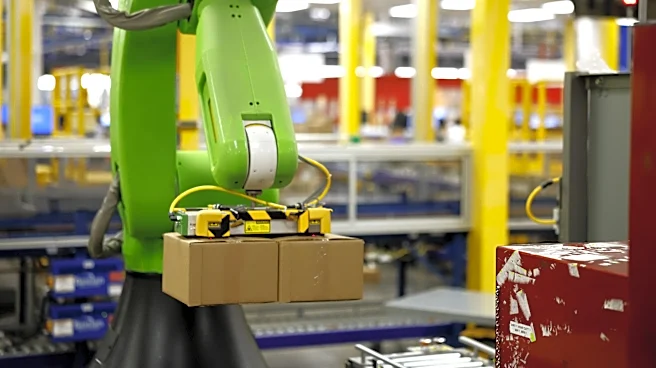
to expand its current 15 unattended operational sites globally, with more additions scheduled for 2027. These automated manufacturing lines can operate for several hours autonomously, often during overnight shifts. P&G has also implemented autonomous robots in loading docks and warehouses and has experimented with driverless trucks. Reynaert projects that these unattended operations will enhance manufacturing productivity by up to 20% over the next four years. This move towards 'dark-shift' manufacturing has raised concerns about potential job losses, with United Autoworkers President Shawn Fain describing robots replacing human factory workers as a 'profound threat.'
Why It's Important?
The expansion of autonomous factory shifts by a major consumer product company like P&G signals a broader trend in U.S. manufacturing towards increased automation, which has significant implications for the American workforce and economy. While P&G aims for substantial cost savings and productivity gains, this shift could lead to job displacement for factory workers, particularly those in manufacturing, purchasing, planning, engineering, and quality control roles. The company has indicated a plan to cut its product-supply workforce, including contractors, by 20% to 30% by 2030. This development highlights the growing tension between technological advancement and labor concerns, as union leaders like Shawn Fain voice strong opposition to automation that replaces human jobs. The Economic Policy Institute's chief economist, Josh Bivens, suggests that while automation is difficult to halt, the U.S. should strengthen its social safety net to support workers affected by these technological changes.
What's Next?
P&G plans to add more unattended operational sites in 2027, continuing its trajectory towards increased automation in its manufacturing processes. The company's goal to improve manufacturing productivity by up to 20% over the next four years suggests a sustained focus on this strategy. The projected reduction of P&G's product-supply workforce by 20% to 30% by 2030 indicates that job impacts will continue to unfold. This ongoing shift is likely to intensify discussions among labor unions, policymakers, and economists regarding the future of work, the need for worker retraining programs, and the adequacy of social safety nets in an increasingly automated economy. The debate over the balance between corporate efficiency and job security will likely remain a prominent issue as more companies adopt similar automation strategies.
Beyond the Headlines
The move by P&G towards fully autonomous factory shifts underscores a fundamental transformation in industrial production, raising ethical and societal questions about the role of human labor in the age of advanced automation. While proponents argue for increased efficiency and competitiveness, the 'profound threat' to jobs, as articulated by Shawn Fain, highlights the potential for significant social disruption. This trend could exacerbate economic inequality if displaced workers lack adequate support or opportunities for new employment. The discussion extends beyond mere job numbers to the quality of remaining jobs, with P&G suggesting that unattended shifts free up employees for less repetitive or customer-facing tasks. However, the long-term implications for worker skills, wages, and the overall structure of the manufacturing sector in the U.S. remain a critical area of concern and policy debate.