






What's Happening?
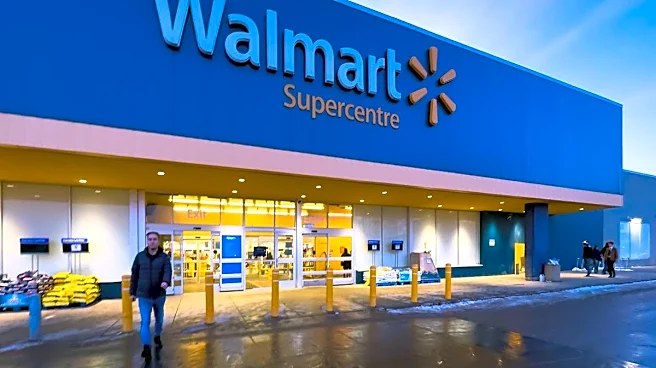
Walmart is actively recruiting Grocery Delivery Drivers for its Supercenter and Neighborhood Market locations, including a specific hiring push in Canton, MI. These drivers will be W-2 employees, a distinction from the gig-economy model, and will be responsible
for transporting customer grocery orders directly to their homes. The role involves loading temperature-controlled orders, driving local delivery routes, ensuring proper handling of refrigerated and frozen items, and processing delivery completions via the Walmart delivery app. This initiative is part of Walmart's broader strategy to expand its in-house grocery delivery service, which currently serves a majority of U.S. households. The company emphasizes providing stable schedules, guaranteed hourly pay, and full corporate benefits to its delivery drivers.
Why It's Important?
This move by Walmart signifies a significant shift in the grocery delivery landscape, moving away from reliance on third-party gig-economy platforms towards an in-house, employee-based model. By offering W-2 employment with benefits, Walmart aims to attract and retain a dedicated workforce, potentially leading to more consistent service quality and reliability for customers. This approach could also set a new standard in the competitive grocery delivery market, influencing other retailers to consider similar employment models. For the U.S. labor market, it represents the creation of more stable, benefit-eligible jobs in the retail and logistics sectors, offering an alternative to the often precarious nature of gig work. This strategy could enhance customer trust and loyalty by ensuring a more professional and controlled delivery experience, directly impacting Walmart's market share in the rapidly growing online grocery segment.
What's Next?
Walmart is expected to continue expanding its in-house delivery fleet, potentially increasing its hiring efforts in various regions across the U.S. The success of this W-2 employee model could lead to further investment in its proprietary delivery infrastructure and technology. Other major retailers and grocery chains will likely observe Walmart's progress closely, potentially evaluating their own delivery strategies and considering a similar transition to employee-based delivery services. This could trigger a broader industry trend towards more formalized employment for delivery personnel. For consumers, this could mean more reliable and higher-quality grocery delivery options, while for workers, it could open up more opportunities for stable employment with benefits in the delivery sector.
Beyond the Headlines
The shift from gig-economy contractors to W-2 employees for grocery delivery has broader implications for labor rights and the future of work in the U.S. It challenges the prevailing model of independent contractors in the delivery sector, potentially influencing policy discussions around worker classification and benefits. This move could also enhance brand perception for Walmart, positioning it as a more responsible employer compared to platforms that rely heavily on contract labor. Furthermore, by controlling its delivery workforce, Walmart gains greater oversight over the entire customer experience, from order fulfillment to the final doorstep delivery, which is crucial for maintaining brand reputation and customer satisfaction in a highly competitive market. This could lead to a more integrated and efficient supply chain, ultimately benefiting both the company and its customers.