



What's Happening?
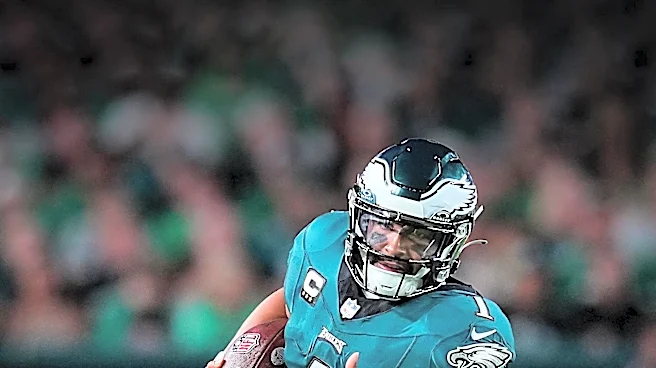
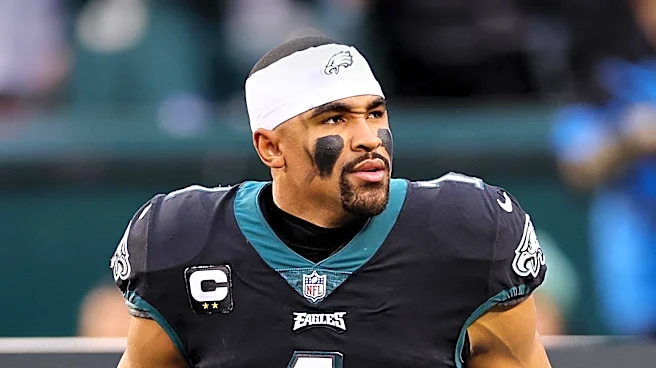
Despite widespread presumption, the NFL and NFL Players Association (NFLPA) have not yet commenced a joint investigation into the medical care and recommendations received by Philadelphia Eagles quarterback Jalen Hurts. Hurts recently returned to the Eagles'
facility after being placed on injured reserve due to blood clots in his lungs. Questions have arisen regarding the decisions made concerning his health before, during, and after flying to London for a game with a blood clot in his leg. The league and the NFLPA previously stated they were 'working together to review the matter,' but a formal investigation by either entity has not begun. The NFLPA has the right under the Collective Bargaining Agreement to initiate an investigation, but this has not occurred.
Why It's Important?
The lack of a formal investigation into Jalen Hurts' blood clot situation raises significant concerns about player safety and medical protocols within the NFL. If the NFLPA does not insist on a fair, objective, and transparent process, it could create an impression of complicity in a potential cover-up, undermining trust between players and the league. This situation highlights the inherent conflict of interest when team and league doctors are responsible for player health while also being incentivized for players to participate in games. A thorough investigation could lead to crucial changes in how serious health conditions are managed, potentially establishing a system where medical decisions are made by individuals disconnected from team or league pressures, similar to the unaffiliated doctors used for concussion protocols. This could set a precedent for improved player welfare across the league.
What's Next?
The NFLPA is expected to consider initiating its own investigation into Jalen Hurts' medical care, as it has the right to do so under the Collective Bargaining Agreement. If an investigation proceeds, it will be critical for the union to ensure the process is fair, objective, and transparent to avoid any perception of a cover-up. The outcome could lead to significant changes in medical decision-making protocols, particularly concerning serious health situations and international games. The goal would be to implement safeguards that prioritize player health over the shared incentives of teams and players for participation. This could involve mandating the involvement of independent medical professionals in critical health assessments to ensure unbiased care.
Beyond the Headlines
This situation extends beyond Jalen Hurts' individual case, touching upon the broader ethical and legal responsibilities of sports organizations towards their athletes. The potential for a conflict of interest, where the desire for a player to compete might overshadow medical best practices, is a recurring theme in professional sports. A robust investigation and subsequent policy changes could establish a new standard for athlete care, emphasizing that players are patients first. This could influence other professional sports leagues to re-evaluate their own medical protocols and ensure greater independence for medical staff. The long-term implication is a shift towards a more player-centric healthcare model, potentially leading to greater accountability for teams and leagues in managing player health.