


What's Happening?
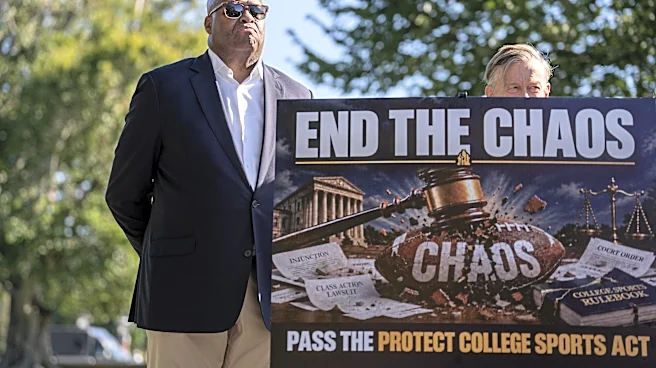
The Protect College Sports Act (PCSA) has passed the U.S. Senate on September 28, 2026, and is now set to be deliberated by the House of Representatives after the 2026 midterm elections. This bipartisan bill addresses contentious issues in collegiate
athletics, including Name, Image, and Likeness (NIL) rights, the transfer portal, and federal protections for student-athletes. A key aspect of the bill is its intentional neutrality on whether college athletes should be considered university employees, a compromise necessary for its Senate passage. Senator Maria Cantwell (D-Wash.), a co-author of the PCSA, has maintained that the bill should not preclude student-athletes from being classified as employees. The bill also proposes increasing the cap for Power 4 conferences to 20 teams and includes a three-year waiting period for schools wishing to transfer between Power 4 conferences, aimed at preventing conference instability.
Why It's Important?
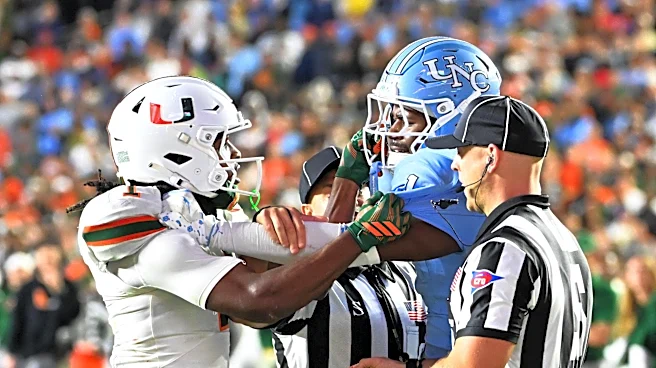
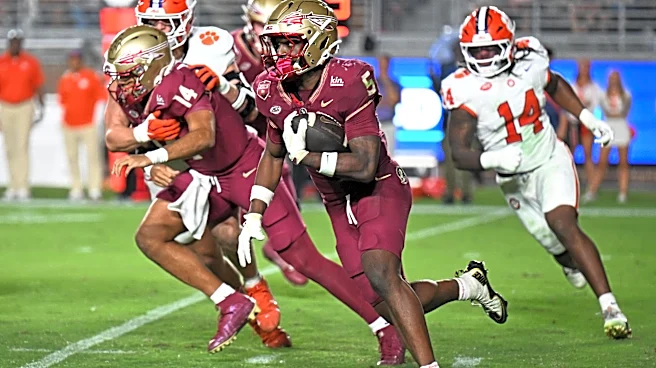
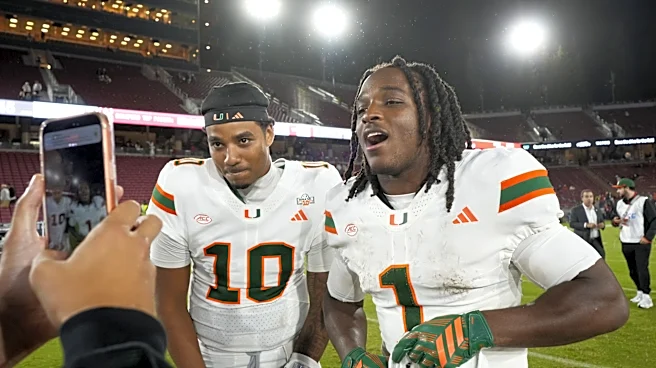
The PCSA's provisions could significantly reshape the landscape of college sports. The debate over student-athlete employment is particularly critical; if classified as employees, athletes could gain rights to unionize, minimum wage, and other benefits, fundamentally altering university athletic budgets and operations. This could lead to universities cutting non-revenue sports to manage costs, despite the PCSA's requirement to allocate funds to these sports. The proposed increase in conference caps and the transfer waiting period aim to stabilize collegiate athletic conferences, which have recently experienced significant realignments. Schools like the University of Miami, Florida State, Clemson, and North Carolina are actively seeking to leave the ACC due to less lucrative media rights deals, and the PCSA's provisions will directly impact their ability to do so, potentially leading to further legal challenges or independent athletic programs.
What's Next?
The House of Representatives is scheduled to begin deliberations on the PCSA on November 9. The bill faces a tight deadline, with only 20 legislative days remaining until December 17, the last day in session before the new Congress convenes in January. If the PCSA does not pass by the end of the year, the legislative process will likely have to restart, causing further delays. House Republicans, including House Majority Leader Steve Scalise, have expressed opposition to the bill's neutrality on student-athlete employment, indicating potential amendments or significant debate. University leaders from ACC schools are lobbying to revise the bill, specifically requesting the removal of the three-year waiting period and an increase in the conference cap to 22 teams. The outcome of these House deliberations will determine the future structure and financial model of college sports for years to come.
Beyond the Headlines
The PCSA reflects a broader national conversation about the amateurism model in college sports and the economic rights of student-athletes. The tension between maintaining the traditional collegiate athletic structure and acknowledging the significant commercial value generated by athletes is at the heart of this legislative effort. The bill's impact extends beyond sports, touching on labor law, antitrust issues, and the financial sustainability of educational institutions. The potential for student-athletes to be recognized as employees could set precedents for other student-led activities within universities. Furthermore, the conference realignment provisions highlight the increasing commercialization of college sports, where media rights deals and financial incentives often outweigh traditional athletic rivalries or academic considerations, prompting a reevaluation of the core mission of collegiate athletics.