




What's Happening?
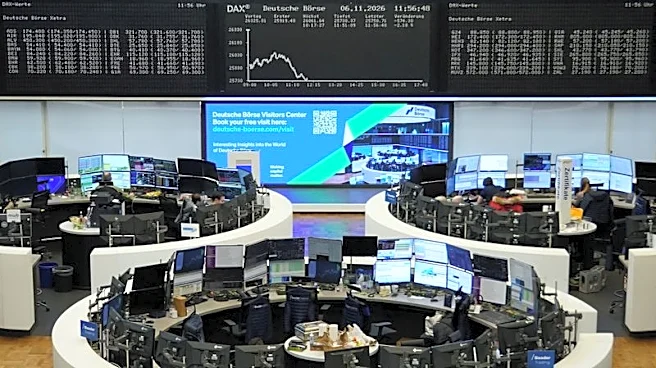
The pan-European STOXX 600 index has risen by 0.7% to 662.83 points, positioning it near its all-time record levels last seen in August. This surge is primarily driven by strong financial forecasts from key companies. Siemens Energy, an AI equipment manufacturer,
saw its shares jump by 6.5% following expectations of significantly higher profit margins by 2027 and an announced plan to more than triple its dividend. This positive sentiment extended to its peers, with Schneider Electric and Legrand experiencing gains of approximately 2.6%, contributing to a 1.7% rise in the broader tech sector. Additionally, US-based neocloud company CoreWeave announced projections of achieving profitability on an adjusted basis by the first half of 2028, further bolstering investor confidence in the AI trade outlook. However, some companies faced setbacks, with wind turbine operator Vestas falling 6% after reporting lower-than-expected third-quarter operating profits, and Czech arms producer CSG dropping 18% after revising down its full-year operating margin forecast. The market also showed some caution due to a rebound in Brent crude prices following shipping attacks in the Strait of Hormuz and concerns over potential interest rate hikes by the Federal Reserve after recent US inflation data.
Why It's Important?
The near-record performance of the STOXX 600 signals robust investor confidence in the European market, particularly within the technology and industrial sectors. Strong outlooks from major players like Siemens Energy and CoreWeave suggest a positive trajectory for AI-related industries and broader industrial growth, which could attract further investment into European equities. This optimism is crucial for economic stability and growth across the continent, potentially leading to increased capital expenditure and job creation in these sectors. The mixed performance, however, highlights underlying vulnerabilities, such as the challenges faced by renewable energy companies like Vestas and the impact of geopolitical events on energy prices. The cautious sentiment stemming from rising crude prices and potential Federal Reserve interest rate hikes indicates that global economic factors continue to influence regional market performance, underscoring the interconnectedness of international financial markets. For U.S. investors, the performance of European markets can signal broader global economic trends and investment opportunities or risks.
What's Next?
The immediate focus for investors will be on upcoming economic data, particularly inflation reports and central bank announcements, which could influence market sentiment and interest rate expectations. The Federal Reserve's stance on interest rates, especially in light of recent US inflation data, will be closely watched as it could impact global capital flows and investor appetite for risk. Further corporate earnings reports from European companies will also be critical in determining whether the current rally has sustainable momentum. The performance of companies like Vestas and CSG will be monitored to see if their challenges are isolated or indicative of broader sector-specific headwinds. Additionally, geopolitical developments, particularly those affecting energy markets like the Strait of Hormuz, will continue to be a factor influencing market volatility. The market will also be looking for further clarity on the profitability timelines of AI-focused companies like CoreWeave to assess the long-term viability of the AI trade.
Beyond the Headlines
The current market dynamics reflect a broader global economic narrative where technological innovation, particularly in AI, is a significant driver of growth, while traditional sectors face evolving challenges. The strong performance of AI-related companies suggests a continued shift in investment focus towards future-oriented technologies, potentially leading to a re-evaluation of traditional industry valuations. This could also signal a growing divergence between companies that successfully adapt to technological advancements and those that struggle. The cautious response to rising oil prices and inflation concerns highlights the persistent tension between growth aspirations and macroeconomic stability. This environment may prompt policymakers to consider strategies that balance technological advancement with measures to mitigate inflationary pressures and ensure energy security. The market's reaction to these varied signals will shape investment strategies and potentially influence long-term economic policies aimed at fostering sustainable growth in an increasingly complex global landscape.