




What's Happening?
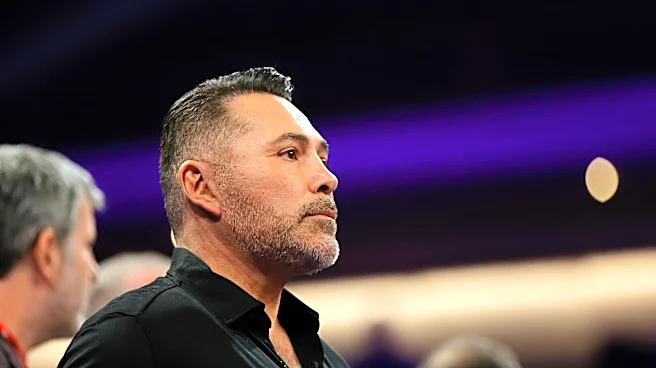
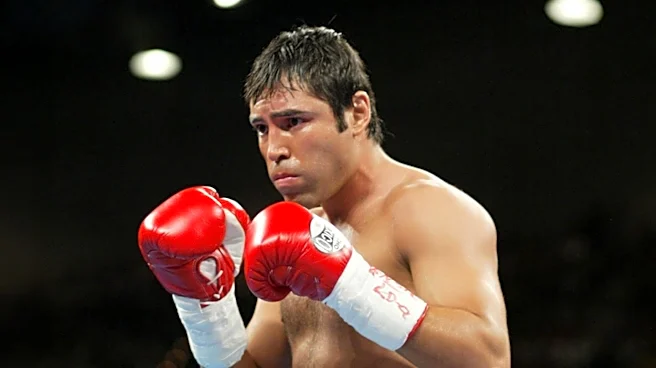
Oscar De La Hoya, a boxing legend and promoter, has voiced strong criticism regarding the current state of boxing, asserting that it is in its "worst place" in history. He believes that while occasional blockbuster fights are being made, often with significant
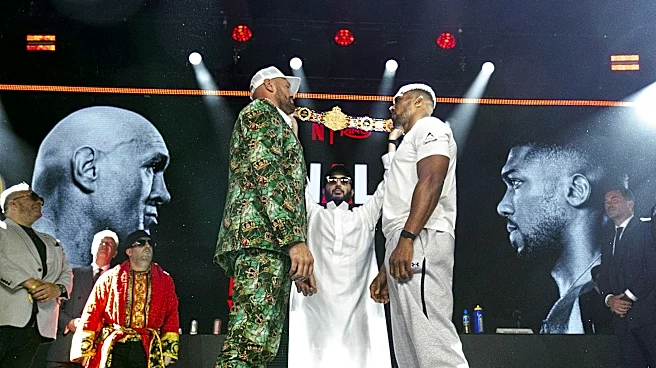
financial backing from entities like Turki Alalshikh and the Saudi Public Investment Fund (PIF), these isolated events are insufficient to address the sport's fundamental issues. De La Hoya argues that many top fighters are prioritizing large paydays over consistent competition, leading to a lack of regular, compelling matchups throughout the year. He points to instances where champions have vacated belts or chosen alternative fights due to financial considerations, rather than facing mandatory challengers or pursuing unification bouts. This trend, according to De La Hoya, creates a fragmented sport where elite contenders are not consistently fighting each other.
Why It's Important?
De La Hoya's critique highlights a significant challenge facing the boxing industry: the balance between financial incentives and competitive integrity. His concerns about fighters waiting for "ultimate purses" rather than engaging in regular, challenging bouts could lead to a decline in the sport's overall quality and fan engagement. While the involvement of entities like Turki Alalshikh has facilitated some high-profile fights, De La Hoya suggests this approach creates an unsustainable model, relying on external funding for sporadic events rather than fostering a robust, year-round schedule of competitive boxing. This situation impacts promoters, broadcasters, and ultimately, the fans, who desire consistent, meaningful matchups. If top fighters are not consistently testing themselves against the best, the sport risks losing its credibility and appeal, potentially affecting its long-term economic viability and cultural relevance.
What's Next?
De La Hoya's comments suggest a need for a fundamental shift in the boxing mindset, encouraging fighters to prioritize consistent competition and career progression over solely pursuing the largest paydays. The ongoing debate about the sport's structure and financial incentives will likely continue, especially as entities like Turki Alalshikh potentially re-evaluate their involvement. If Alalshikh's influence wanes, as some reports suggest, the boxing world may face renewed challenges in staging major fights without his substantial financial backing. This could force promoters and sanctioning bodies to re-evaluate their strategies for creating compelling matchups and ensuring the sport's financial health. The future will likely involve continued discussions among stakeholders about how to balance the commercial aspects of boxing with the need for competitive integrity and a consistent schedule of high-quality fights.
Beyond the Headlines
De La Hoya's observations delve into the ethical and structural dilemmas within professional boxing. The emphasis on individual fighter purses over the collective health of the sport raises questions about the responsibilities of promoters, managers, and sanctioning bodies. The reliance on external, often state-backed, funding for major events, as seen with the Saudi PIF, introduces a new dynamic that could centralize power and influence, potentially at the expense of traditional boxing structures. This also touches upon the broader issue of athlete empowerment versus organizational control in professional sports. If fighters are increasingly able to dictate their opponents and timelines based on financial gain, it could undermine the traditional championship system and the meritocratic principles that are supposed to govern boxing. The long-term cultural impact could be a sport perceived as more about spectacle and less about genuine athletic competition, potentially alienating purist fans.