





What's Happening?
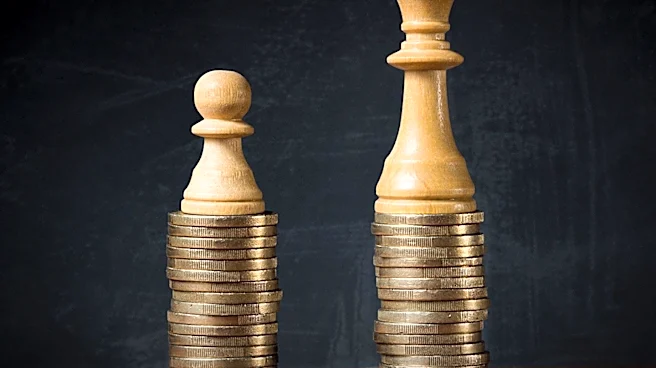
A recent report by UBS reveals that global personal wealth increased by 11% last year, yet this growth was unevenly distributed. The top 1.5% of the population now holds nearly 50% of the world's wealth, benefiting from strong financial markets. In the U.S.,
the wealth gap continues to widen, with the average wealth per adult increasing by 10% from 2020 to 2025, while median wealth fell by 20%. The report highlights the persistence of a K-shaped economy in the U.S., where the wealthy benefit from a booming stock market, while inflation disproportionately affects lower-income households. Despite these disparities, the percentage of people in the lowest wealth bracket globally has decreased, indicating some upward economic mobility.
Why It's Important?
The findings underscore the growing economic divide, which could have significant implications for social stability and economic policy. The concentration of wealth among a small elite may fuel public discontent and calls for policy reforms aimed at wealth redistribution. The report also suggests that technological advancements, such as artificial intelligence and nuclear fusion, could further impact wealth distribution. These trends may influence future economic policies and debates around taxation and social welfare, as governments grapple with addressing inequality while fostering economic growth.
What's Next?
As wealth inequality continues to be a pressing issue, policymakers may face increased pressure to implement measures that address the economic divide. Potential actions could include tax reforms targeting the ultra-wealthy, increased investment in social programs, and policies aimed at boosting economic opportunities for lower-income groups. The ongoing impact of technological advancements on the economy will also be a critical area of focus, as these developments could reshape labor markets and further influence wealth distribution.