


What's Happening?
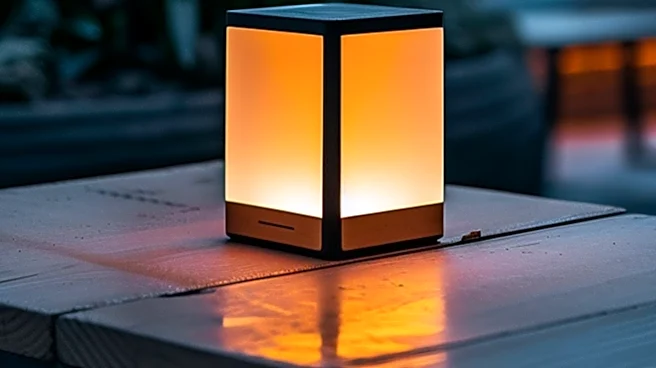
The Gel Lamp, designed by Billy Easter through his studio Public Parts, introduces a tactile and hands-on approach to mood lighting, moving away from app-controlled smart home systems. This cube-shaped table lamp, made from hand-cast silicone, allows
users to change the light's color by physically swapping slim, translucent silicone slides, or 'gels,' that slot into its base. This method draws inspiration from professional lighting design, where color gels are used to transform scene lighting. The lamp's design emphasizes simplicity and physical interaction, offering a refreshing alternative for those who prefer to adjust their lighting without relying on digital interfaces, Bluetooth pairing, or software updates. The entire object, including the interchangeable gels, is made from silicone, providing a soft, tactile feel.
Why It's Important?
The Gel Lamp represents a significant counter-trend in the increasingly digitized world of home technology. While smart bulbs like Philips Hue offer convenience through app control and voice commands, the Gel Lamp appeals to a desire for tangible interaction and simplicity. This product highlights a growing segment of consumers who may be experiencing 'smart home fatigue' and are seeking products that offer a more direct and intuitive user experience. By focusing on the physical act of changing a gel, the lamp transforms a mundane task into a small creative ritual, allowing for personalized space adjustment without the complexities of digital ecosystems. This approach could influence other product categories to explore more tactile and less app-dependent user interfaces, catering to a preference for craftsmanship and direct engagement over purely digital control.
What's Next?
The introduction of products like the Gel Lamp could encourage a broader re-evaluation of 'smart' features in home goods, potentially leading to a market for 'un-smart' or 'tactile-first' alternatives. Manufacturers might explore how to integrate physical interaction and sensory experiences into their designs, moving beyond the current emphasis on app-based control. This could also spark innovation in material science, focusing on textures and forms that enhance user interaction. For consumers, it offers more diverse choices in how they interact with their home environment, allowing them to select products that align with their preferences for simplicity and direct engagement. The success of such products may also prompt smart home companies to consider incorporating more tactile elements or offering simpler, more intuitive physical controls alongside their digital interfaces.
Beyond the Headlines
The Gel Lamp's design taps into a deeper human need for physical interaction and control in an increasingly abstract and digital world. It challenges the notion that technological advancement must always equate to more complex, app-driven solutions. By offering a simple, physical mechanism for changing mood lighting, the lamp provides a sense of agency and direct engagement that can be deeply satisfying. This approach also subtly critiques the disposable nature of some tech products, as the Gel Lamp is designed as a durable, hand-cast object meant to be kept and interacted with over time. It speaks to a desire for authenticity and craftsmanship, suggesting that sometimes the most meaningful upgrades to a space are those that can be held and manipulated by hand, fostering a more personal and intimate relationship with one's environment.