





What's Happening?
In November 2026, ING, a Dutch multinational banking and financial services corporation, initiated a rare competitive auction process, known as a Bids Wanted in Competition (BWIC). This auction involves a portfolio of 12 data center loan packages, valued
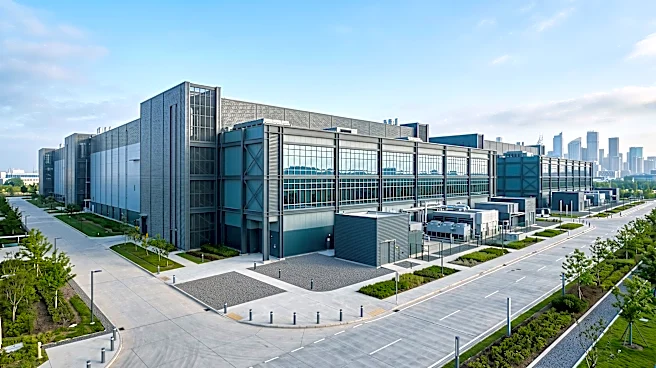
at approximately $500 million. The loans are tied to significant data center infrastructure projects, including those associated with CyrusOne, Vantage, and the 'Star Gate' flagship plan, which is backed by OpenAI, SoftBank, and Oracle. This move by ING signals a shift in the financial landscape for AI infrastructure, as financial institutions accelerate the transfer of credit risk. This action breaks a two-year period characterized by unlimited debt expansion in AI infrastructure, suggesting a potential bubble in the sector. The current environment is marked by rising capital costs, tightening financing conditions, and constraints in power supply, contributing to a broader infrastructure storm.
Why It's Important?
This development is important because it indicates a potential cooling or re-evaluation of the rapid, debt-fueled expansion in the AI infrastructure sector. The initiation of a BWIC by a major financial institution like ING suggests that lenders are becoming more cautious about their exposure to data center loans. This could lead to stricter lending criteria and higher costs of capital for companies like CyrusOne and other data center operators, potentially slowing down the development of new AI infrastructure. For the broader U.S. economy, a slowdown in AI infrastructure investment could impact technological advancement and job creation in the tech sector. Companies relying on extensive data center capacity, such as those involved in AI development, might face increased operational costs or delays in scaling their services. This financial shift could also affect investors who have poured capital into data center real estate and related technologies, potentially leading to a re-pricing of assets in this sector.
What's Next?
The outcome of ING's BWIC will likely set a precedent for future financing activities in the AI infrastructure market. If the auction results in lower valuations or difficulty in offloading these loans, other financial institutions may follow suit, leading to a more widespread tightening of credit for data center projects. This could force data center operators and AI companies to seek alternative funding sources, potentially through equity financing or strategic partnerships, which might dilute existing shareholder value. Furthermore, the rising capital costs and power supply constraints mentioned in the report suggest that the operational environment for data centers will become more challenging. Companies like CyrusOne may need to re-evaluate their expansion strategies, focusing on efficiency and securing long-term power agreements. The 'infrastructure storm' could also prompt regulatory bodies to examine the financial stability of the AI infrastructure sector and its potential systemic risks.
Beyond the Headlines
The current situation highlights a deeper tension between the rapid technological advancements in AI and the underlying financial and physical infrastructure required to support them. The 'unlimited debt expansion' in AI infrastructure over the past two years suggests a speculative bubble, where investment outpaced sustainable growth and risk assessment. ING's move to offload data center loans could be an early indicator of a broader market correction, forcing a more disciplined approach to financing large-scale tech infrastructure. This could lead to a re-evaluation of the true costs and environmental impact of AI, particularly concerning energy consumption. The tightening credit conditions might also favor larger, more established players with stronger balance sheets, potentially consolidating power in the hands of a few dominant tech and data center companies. Ethical considerations regarding the environmental footprint of AI and the financial stability of its supporting infrastructure will likely gain more prominence as these economic pressures intensify.