






What's Happening?
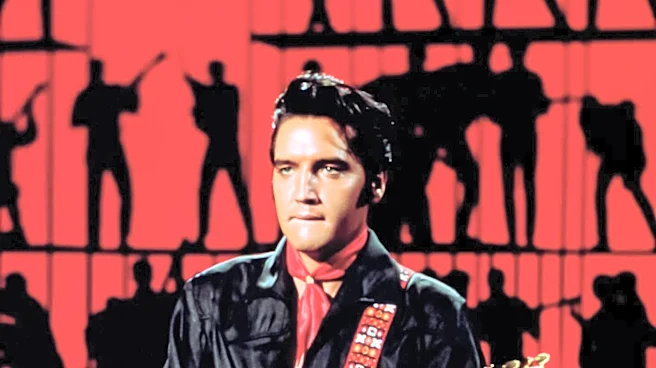
Nike recently faced public backlash regarding a social media caption for an advertisement featuring Italian tennis star Jannik Sinner. The ad itself, which showcased Sinner in Nike gear with the tagline 'Actually, you can win them all,' was well-received.
However, when Nike posted the image on social media with the caption, 'This isn’t just history — it’s his story in the making,' users quickly accused the company of using AI to generate the text. The accusation stemmed from the caption's use of a sentence structure and punctuation (specifically, an em dash) commonly associated with AI-generated content, particularly from models like ChatGPT. This incident highlights a growing concern among consumers and within the marketing industry about the authenticity of brand communications in the age of artificial intelligence.
Why It's Important?
This event underscores a significant challenge for brands operating in the U.S. market and globally: maintaining perceived authenticity amidst the increasing integration of AI in content creation. Consumer trust is paramount, and accusations of AI-generated content, even for minor elements like a social media caption, can lead to reputational damage. The incident with Nike and Jannik Sinner illustrates how quickly public opinion can turn against a brand if its communications are perceived as inauthentic or lacking a 'human touch.' This scrutiny forces brands to navigate a complex landscape where the benefits of AI for efficiency and personalization must be weighed against the potential for alienating an audience that values genuine human expression. Furthermore, it raises questions about the future of marketing and advertising ethics, as the lines between human and AI-generated content become increasingly blurred.
What's Next?
The incident suggests that brands will need to develop more transparent strategies regarding their use of AI in marketing. While some companies might consider 'No AI used here!' pledges, such claims could backfire if any AI involvement is later discovered. A more proactive approach could involve brands actively participating in the conversation about AI, perhaps by publishing 'How we use AI in marketing' statements on their websites. This would provide context and clarity on how AI is employed to enhance efficiency or improve content, such as A/B testing. Additionally, the ongoing development of AI detection tools and watermarking technologies, like those implemented by Anthropic's Claude models, indicates a future where the involvement of AI in content creation may become more traceable, albeit with current limitations and ambiguities. Brands will need to adapt to these evolving technological and regulatory landscapes.
Beyond the Headlines
The Nike controversy delves into deeper implications concerning the very definition of authenticity in the digital age. As AI becomes more sophisticated at imitating human creativity, the public's ability to discern human-generated content from AI-generated content diminishes, leading to increased suspicion. This creates a 'war' in the marketing industry, where brands are not only striving to connect with consumers but also to prove their content is genuinely human-made. The focus shifts from the quality or effectiveness of the content to the method of its creation. This trend could lead to a devaluation of content perceived as AI-generated, regardless of its actual merit. It also highlights a potential ethical dilemma for brands: how much AI is too much, and at what point does efficiency compromise authenticity? The incident with Nike serves as a bellwether for the ongoing societal and cultural adjustments required as AI continues to permeate creative industries.