






What's Happening?
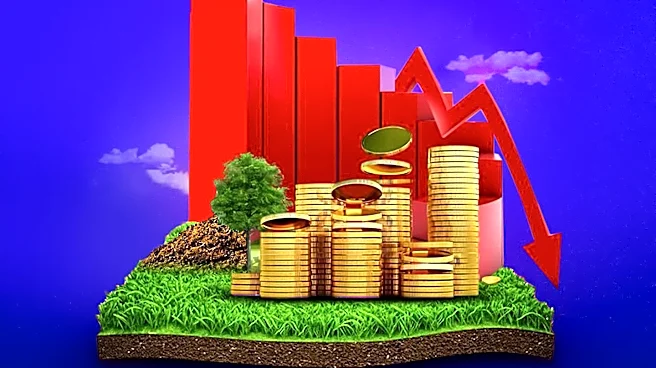
Farmland prices in Brazil's Mato Grosso state experienced a decline in dollar terms between 2024 and 2025, according to a study by S&P Global and Purdue University. This downturn has widened the price gap with Iowa farmland, a significant shift after
the two regions saw convergence during a recent commodity boom. The decrease in Mato Grosso's farmland values is attributed to tighter farm margins, high producer debt, and currency fluctuations. While this makes land cheaper in Brazil, potentially maintaining its competitive edge in global agricultural markets, it also presents an opportunity for investors looking for future appreciation. Historically, farmland values in Mato Grosso have been more volatile than in Iowa, with significant surges between 2010-2014 and 2020-2022, the latter driven by high profitability for Brazilian farmers due to strong international demand, low global grain inventories, and a weaker Brazilian real. However, a market downturn in 2023, marked by declining commodity prices and an increase in interest rates, squeezed revenues and led to a sharp drop in liquidity in the farmland market.
Why It's Important?
The divergence in farmland values between Mato Grosso and Iowa highlights the differing economic pressures and market dynamics affecting agricultural regions globally. For U.S. agriculture, the relative stability of Iowa's farmland values, despite weaker commodity prices, underscores the resilience of its market, supported by limited new farmland availability and strong investment demand. This stability can provide a buffer for U.S. farmers and investors against the volatility seen in other major agricultural producers. Conversely, the decline in Mato Grosso could impact global commodity markets by potentially increasing Brazil's competitive advantage due to cheaper land, influencing international trade flows and pricing for crops like soybeans and corn. Elevated interest rates are a common constraint, limiting investment demand and keeping liquidity subdued, which could slow recovery in land values across various agricultural markets, including parts of the U.S.
What's Next?
The current economic climate, characterized by elevated interest rates, is expected to continue constraining investment demand and keeping liquidity subdued, which could slow any recovery in land values. For Brazil, the cheaper land might help maintain its competitive advantage in global agricultural markets, potentially leading to increased production and export volumes. Investors might view the current downturn in Mato Grosso as an opportunity to acquire land at lower prices, anticipating a future appreciation cycle. In the U.S., particularly in regions like Iowa, the focus will likely remain on maintaining market stability through strong investment demand and managing the limited availability of new farmland. The broader agricultural sector will need to monitor interest rate trends and commodity prices, as these factors will significantly influence future farmland value trajectories and investment decisions.
Beyond the Headlines
The contrasting trends in farmland values between Mato Grosso and Iowa reveal deeper implications regarding global agricultural resilience and investment strategies. The volatility in Brazil, influenced by currency fluctuations and high producer leverage, underscores the risks associated with rapid expansion driven by commodity booms. This situation could lead to a re-evaluation of risk management practices for agricultural investors and lenders operating in emerging markets. In the U.S., the sustained strength of Iowa's farmland market, even amidst commodity price weakness, suggests a robust underlying demand for agricultural assets, possibly driven by a perception of land as a stable, long-term investment. This could further entrench the U.S. as a preferred destination for agricultural capital, influencing global food security and land ownership patterns. The interplay between global economic conditions, local agricultural policies, and investor sentiment will continue to shape the landscape of farmland values worldwide.