







What's Happening?
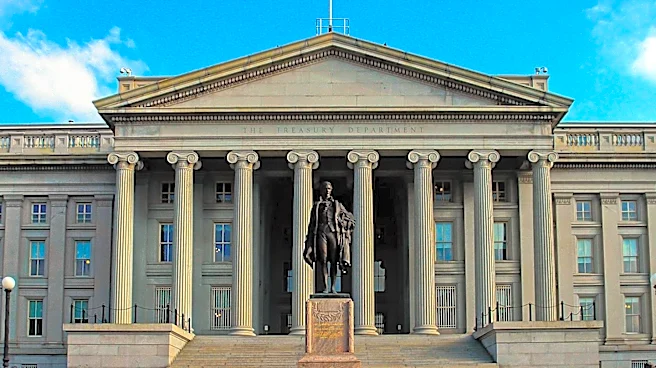
The U.S. Treasury Department has imposed a $1.2 billion penalty on Bank of America, the nation's second-largest bank, for significant failures in its anti-money laundering (AML) and sanctions compliance programs. The Treasury stated that Bank of America failed
to report over $5 billion in suspicious transactions to the Financial Crimes Enforcement Network (FinCEN), including activities linked to Chinese money-laundering networks operating along the U.S. southwestern border. Additionally, the bank violated several sanctions programs, specifically those related to Iran, Russia, narcotics, and global terrorism. Treasury Secretary Scott Bessent emphasized that such failures by a major financial institution expose the entire U.S. financial system to illicit finance risks. The fine includes a $750 million civil penalty from the Office of the Comptroller of the Currency (OCC), marking its largest penalty ever, and an $11.6 million settlement with the Office of Foreign Assets Control (OFAC) for 475 apparent sanctions violations. Bank of America has admitted to willfully violating the Bank Secrecy Act and has been ordered to work with a third party to identify and report previously undetected suspicious transactions, as well as undergo an independent review of its suspicious activity identification processes. A Bank of America spokesperson acknowledged the issues, stating the bank has invested billions in technology and personnel to combat financial crime and is committed to addressing the regulators' concerns, noting the fine will impact its upcoming third-quarter earnings by approximately 17 cents per share.
Why It's Important?
This substantial fine against Bank of America underscores the critical importance of robust anti-money laundering and sanctions compliance within the U.S. financial system. The Treasury's action highlights the severe consequences for financial institutions that fail to uphold their obligations, particularly when such failures facilitate illicit activities like Chinese money laundering networks and transactions violating international sanctions. The exposure of the U.S. financial system to these risks can undermine national security, enable criminal enterprises, and destabilize economic integrity. For the banking industry, this serves as a stark reminder that even the largest institutions are not exempt from stringent regulatory oversight and accountability. The penalty, being the third-largest ever imposed by the Treasury Department, signals a continued aggressive stance by U.S. authorities against financial crimes. It also emphasizes the need for banks to proactively invest in and maintain effective internal controls and trained staff, rather than relying on external inquiries to detect suspicious activities. The impact on Bank of America's earnings, reducing net income by 17 cents per share, demonstrates the direct financial repercussions of non-compliance, potentially influencing investor confidence and stock performance for the bank and possibly other financial institutions.
What's Next?
Following the imposition of this significant fine, Bank of America is mandated to collaborate with a third party to identify and report any previously undetected suspicious transactions. This will involve a comprehensive review of its past activities and internal processes to ensure full compliance with regulatory requirements. The bank must also undergo an independent review of its suspicious activity identification procedures, which will likely lead to substantial overhauls in its compliance infrastructure, technology, and staffing. Regulators will closely monitor these efforts to ensure the bank effectively addresses the identified shortcomings and prevents future violations. This action is part of a broader trend by the U.S. government to combat money laundering and enhance compliance across the financial sector, including the cryptocurrency industry. Other financial institutions are likely to face increased scrutiny and may proactively review their own AML and sanctions compliance programs to avoid similar penalties. The fine's impact on Bank of America's third-quarter earnings will be closely watched by investors and analysts, potentially influencing market perceptions of the bank's operational risks and regulatory exposure. The Treasury's clear message indicates that enforcement actions against financial institutions for compliance failures will continue to be a priority.
Beyond the Headlines
The Bank of America fine extends beyond immediate financial penalties, touching upon deeper ethical and systemic implications for the U.S. financial landscape. The Treasury's assertion that the bank 'prioritized its revenues' over building adequate compliance programs suggests a cultural issue where profit motives may have overshadowed regulatory responsibilities. This raises questions about corporate governance and the ethical frameworks within large financial institutions, particularly concerning their role as gatekeepers against illicit finance. The reliance on external parties like law enforcement for detecting suspicious activity, rather than robust internal controls, highlights a fundamental flaw in the bank's operational integrity and its commitment to its societal obligations. This case could trigger a broader re-evaluation of how financial institutions balance commercial objectives with their critical role in national security and crime prevention. Furthermore, the involvement of Chinese money-laundering networks along the U.S. southwestern border underscores the complex and evolving nature of transnational financial crime, linking seemingly disparate issues like border security and international finance. The incident also reinforces the ongoing challenge of maintaining a secure and transparent financial system in an increasingly interconnected global economy, where illicit actors constantly seek new avenues for exploitation.