






What's Happening?
Nvidia is reportedly in discussions with Brightspeed, an internet and telecommunications provider, to transform more than 130 of its existing telecommunications buildings across the U.S. into compact data centers. The proposal was initially presented
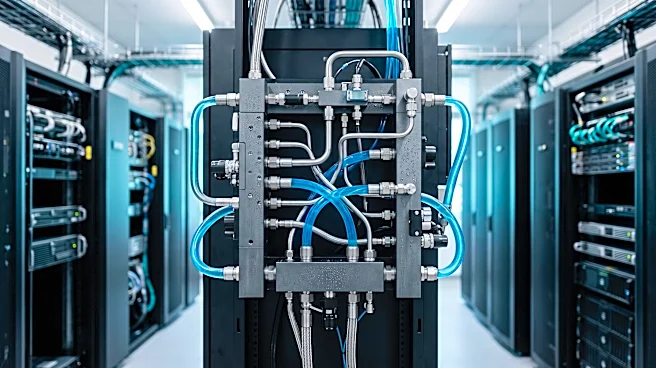
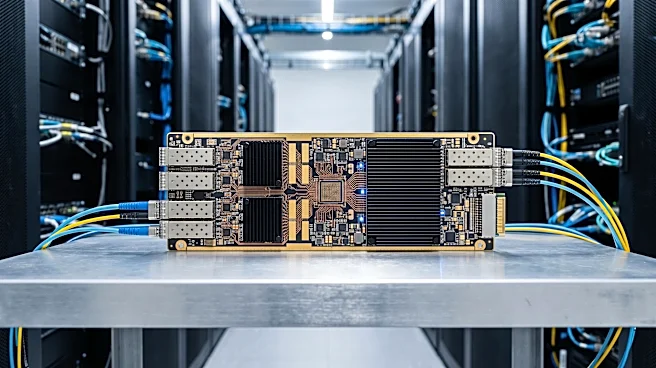
by Nvidia to executives at Apollo Global Management, Brightspeed's parent company. Following this, Apollo Global Management requested a written plan from Nvidia, which has since been submitted. Nvidia is now seeking additional information, data, and access for site visits to Brightspeed's infrastructure. Many of these buildings are already equipped to handle data and voice traffic and possess the necessary power infrastructure to support Nvidia's servers. Nvidia estimates that these sites could collectively provide approximately 1 gigawatt of compute capacity, potentially accommodating over 2,200 Supermicro Vera Rubin NVL72 racks, each containing 72 Rubin GPUs and 36 Vera CPUs. While the power infrastructure is largely in place, Nvidia would still need to install cooling systems and other supporting architecture, which would require local government permits and approvals.
Why It's Important?
This initiative by Nvidia represents a strategic shift in data center development, moving away from constructing large, centralized facilities to repurposing existing infrastructure. This approach could significantly reduce the time and regulatory hurdles typically associated with building new data centers from the ground up, which often face community opposition and delays. The proposal could also help Apollo Global Management, which has made substantial investments in AI hardware, find immediate deployment locations for the Nvidia chips it has ordered, including a $40 billion deal with SpaceX for approximately 360,000 Vera Rubin GPUs. This distributed network of smaller data centers, described by Nvidia as an 'inference network,' is crucial for running existing AI models and supporting the increasing demand from AI agents, which consume significantly more computational resources. The move comes as data center bans and moratoriums have been enacted across the U.S., making it more challenging for AI companies to secure the necessary compute capacity.
What's Next?
Nvidia is currently in the information-gathering phase, requesting more data and site visits from Brightspeed. The next steps would involve detailed assessments of the selected buildings to determine the feasibility and specific requirements for installing cooling systems and other necessary infrastructure. Securing local government permits and approvals for these modifications will be a critical phase, though it is anticipated to be less complex than obtaining permits for entirely new data center constructions. If the plan proceeds, it could lead to a rapid deployment of AI compute capacity across various locations, potentially setting a precedent for how future AI infrastructure is developed in the U.S. The success of this model could also influence other AI companies and infrastructure providers to explore similar strategies for expanding their compute capabilities.
Beyond the Headlines
The repurposing of old telecommunications buildings for AI data centers highlights a broader trend of optimizing existing assets to meet new technological demands. This strategy not only addresses the immediate need for AI compute power but also offers environmental benefits by reducing the carbon footprint associated with new construction. It also presents a potential solution to the growing public resistance against large data center developments, which often raise concerns about energy consumption, noise pollution, and land use. The concept of an 'inference network' composed of numerous smaller sites could also lead to more resilient and geographically distributed AI infrastructure, potentially improving latency for AI applications closer to end-users. This development could also signal a shift in the real estate market for industrial properties, with a new demand for older, well-connected buildings suitable for conversion into specialized tech infrastructure.