

What's Happening?
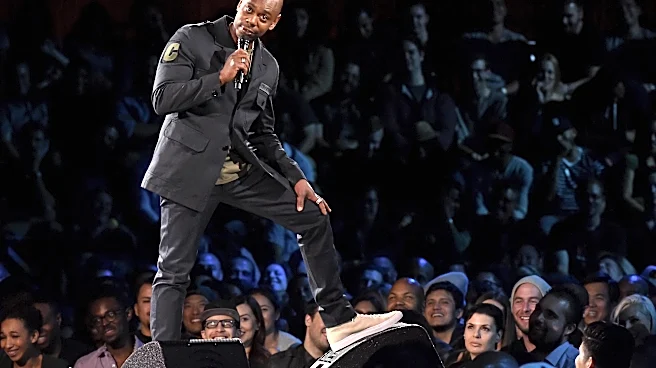
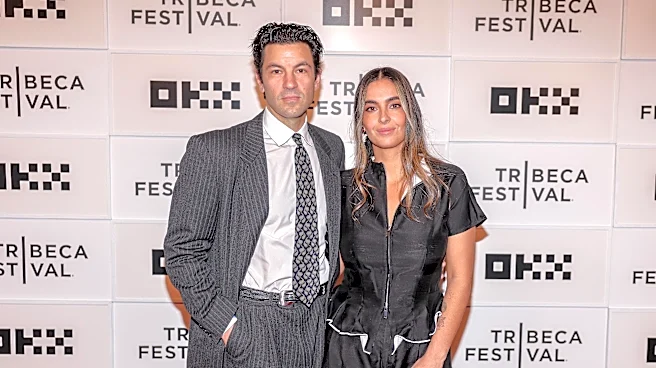
Dave Chappelle's film, 'Dave Chappelle: Live in Real Life,' which was shown at the Tribeca Film Festival in New York City in 2021, continues to be elusive for viewers. This elusiveness is largely attributed to the lingering impact of the controversy surrounding
his special, 'The Closer,' which aired shortly after the film's festival debut. The controversy primarily centered on accusations of transphobia in 'The Closer.' While the intensity of the controversy has lessened by 2026, its damaging effects persist, making the film difficult for the public to access. The mainstream media, according to the source, did not fully capture the deeper context of Mr. Chappelle's comedy, which is influenced by his upbringing in Yellow Springs and Washington, D.C., and his father, William David Chappelle III, an Antioch professor and co-founder of H.U.M.A.N., an organization dedicated to dismantling systemic racism.
Why It's Important?
The ongoing impact of the 'The Closer' controversy on 'Dave Chappelle: Live in Real Life' highlights the significant influence of public perception and social discourse on artistic works and their distribution. For artists like Mr. Chappelle, public backlash, even if its intensity wanes over time, can have lasting consequences on the accessibility and reception of their creative output. This situation underscores the challenges artists face in navigating complex social issues and the potential for their work to be viewed through the lens of past controversies. It also suggests a broader societal trend where discussions around sensitive topics can overshadow other aspects of an artist's work, potentially limiting its reach and understanding. The difficulty in accessing the film means that a potentially significant piece of Mr. Chappelle's work, offering insights into his background and motivations, remains largely unseen by the public.
Beyond the Headlines
The situation surrounding 'Dave Chappelle: Live in Real Life' and 'The Closer' controversy delves into the complex interplay between artistic expression, public accountability, and the evolving landscape of social justice. The source suggests that a deeper understanding of Mr. Chappelle's background, particularly his upbringing in Yellow Springs and his father's activism against systemic racism, could offer a different perspective on his comedy. This implies that public discourse often simplifies complex artistic narratives, focusing on immediate controversies rather than the broader context or intent. The difficulty in accessing the film, therefore, not only affects Mr. Chappelle's career but also limits the public's opportunity for a more nuanced engagement with his work, potentially hindering a deeper cultural conversation about comedy's role in addressing societal issues and the artist's responsibility within that framework.