







What's Happening?
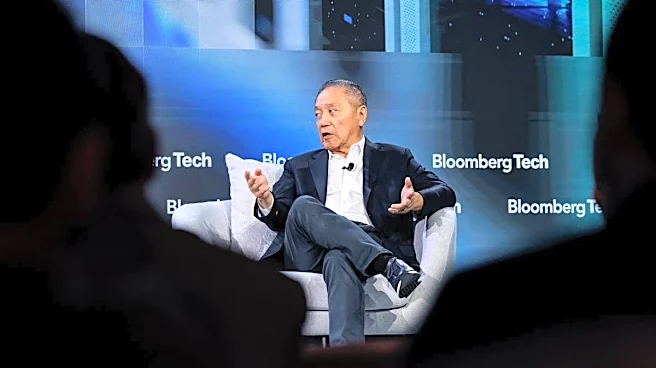
Marc Ganzi, CEO of DigitalBridge Group, has issued a warning about the current state of the AI infrastructure market, drawing parallels to the late 1990s fiber overbuild. Following the sale of DigitalBridge to SoftBank for $4 billion, Ganzi described
the market as being in a 'toppy-esque moment.' He highlighted a widening leverage divide within the data center market, noting that DigitalBridge typically maintains a 45% loan-to-value (LTV) ratio, while newer competitors are pushing into the 70% to 80% LTV range. Ganzi differentiates between 'islands of safety'—investment-grade tenants with long-term leases—and unrated operators relying on aggressive private credit structures. He also criticized the financing architecture around NVIDIA's chip-financing initiative as 'priced to perfection,' implying that every assumption in the financial stack must hold for the structure to remain stable. NVIDIA has partnered with major financial institutions to raise over $500 billion in third-party capital for this program.
Why It's Important?
Ganzi's warning is significant because it comes from a seasoned industry veteran who has successfully built digital infrastructure into an institutional asset class. His concerns about overleverage and speculative financing models suggest potential instability in the rapidly expanding AI infrastructure sector. A market correction could disproportionately impact newer developers with high LTV ratios and unrated operators, potentially leading to financial distress and consolidation. The comparison to the late 1990s dot-com bubble, where companies over-invested in fiber networks before demand caught up, signals a risk of similar outcomes in the AI data center buildout. This could affect the broader technology sector, as the availability and cost of AI compute resources are critical for innovation and growth across various industries. Investors, particularly those in private credit and real estate, could face significant risks if the market experiences a downturn.
What's Next?
The AI infrastructure market is likely to face increased scrutiny regarding financing practices and leverage levels. Lenders and investors may become more cautious, potentially tightening credit conditions for projects with high loan-to-value ratios or unproven operators. This could lead to a bifurcation of the market, where established players with strong balance sheets and investment-grade tenants continue to attract capital, while newer, highly leveraged entrants struggle. Companies like NVIDIA, which rely on complex financing structures for their chip-financing initiatives, may face questions about the sustainability of these models if market conditions shift. The industry may also see a consolidation phase, where financially stronger entities acquire distressed assets from overleveraged competitors. The long-term impact will depend on whether AI demand continues to grow at a pace that justifies the current infrastructure buildout and associated financing risks.
Beyond the Headlines
Ganzi's critique extends beyond mere financial risk, touching upon the qualitative aspects of infrastructure development. He emphasizes that 'gigawatt projects are really tough' and that customers can discern between experienced developers and first-time entrants. This suggests that the quality and reliability of AI infrastructure, not just its availability, will become a critical differentiator. The 'priced to perfection' financing around NVIDIA's initiatives highlights a broader trend of financial engineering supporting rapid technological expansion, raising questions about the underlying economic fundamentals versus speculative capital flows. This situation could lead to a 'flight to quality' in the data center market, where robust, well-managed facilities with stable tenants become even more valuable. Ultimately, the current environment could shape the future landscape of AI infrastructure, determining which companies have the resilience to weather potential market volatility and continue to drive technological advancement.