



What's Happening?
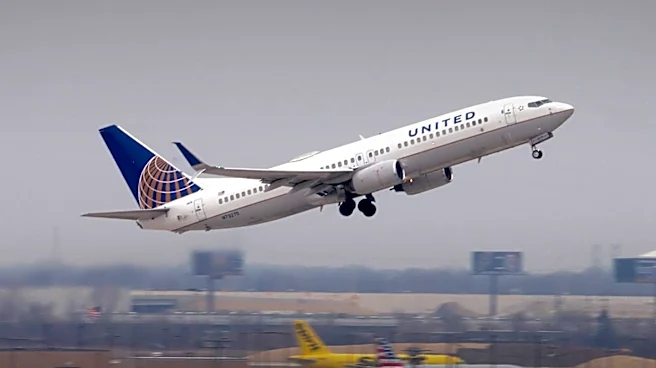
United Airlines has announced its intention to restart direct flights from San Francisco to Tel Aviv in the spring. This decision follows the airline's planned resumption of service from its Newark hub to Tel Aviv next month. Arch-rival Delta Air Lines
is also set to renew its flights to Tel Aviv from New York around the same time. United plans to offer thrice-weekly flights on the San Francisco-Tel Aviv route, commencing March 28. Historically, United has maintained the highest number of flights to Israel among U.S. carriers. Further resumptions include United's flights from Chicago and Washington, D.C., to Israel in October, and Delta's flights from Atlanta in December. This move comes after El Al Airlines announced in June its own plans to resume nonstop service to San Francisco in October, following a six-year hiatus, driven by increased demand between the two technology-focused cities.
Why It's Important?
The resumption of direct flights between major U.S. cities and Tel Aviv signifies a crucial step in restoring international travel and economic ties, particularly between the U.S. and Israel. For the U.S. airline industry, this indicates a recovery in long-haul international routes, which were significantly impacted by global events. The increased competition, with both United and Delta re-entering the market, could lead to more competitive pricing and improved services for travelers. The San Francisco-Tel Aviv route is particularly important due to the strong connections between Silicon Valley and Israel's tech sector, facilitating business travel, investment, and collaboration. This renewed air connectivity supports economic growth, strengthens bilateral relations, and caters to the demand from both business and leisure travelers, including those visiting family or for religious tourism. The move also reflects a broader confidence in the stability and safety of air travel to the region.
What's Next?
Following the announced resumption, United Airlines will proceed with the logistical preparations for the San Francisco-Tel Aviv route, including scheduling, crew assignments, and marketing efforts. Travelers can expect to see booking options become available for these flights in the near future. The reintroduction of these routes by major U.S. carriers will likely be closely monitored by other airlines and the travel industry as an indicator of market recovery and demand. The competitive landscape between United, Delta, and El Al on these routes will intensify, potentially leading to further adjustments in flight frequencies, pricing strategies, and service offerings. The success of these resumed flights could also influence decisions regarding the re-establishment of other international routes that were previously suspended, contributing to a broader revitalization of global air travel networks.
Beyond the Headlines
The decision to resume these flights extends beyond mere commercial operations; it reflects a deeper geopolitical and economic confidence. The San Francisco-Tel Aviv route, often dubbed 'Silicon Wadi Express,' is a vital artery for the technology sectors of both countries, fostering innovation, venture capital flow, and talent exchange. The consistent demand for this route, even amidst previous suspensions, underscores the enduring strategic importance of the U.S.-Israel tech partnership. The re-establishment of these air links can also be seen as a symbolic gesture of normalcy and stability, encouraging cultural exchange and tourism, which are crucial for fostering mutual understanding and strengthening diplomatic ties. The airline industry's commitment to these routes, despite potential regional complexities, highlights the long-term strategic value placed on connectivity with Israel, reinforcing its position as a key global hub for technology and innovation.