





What's Happening?
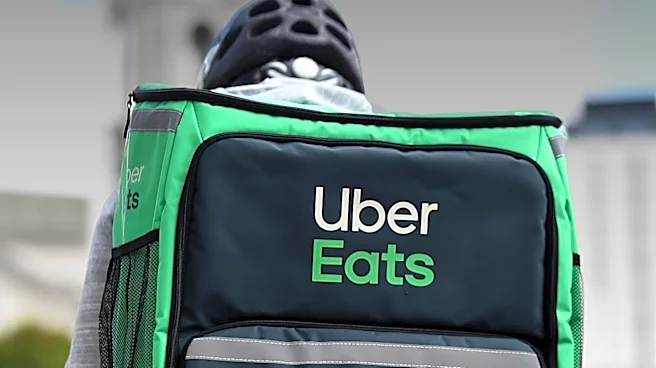
The City of Seattle’s Office of Labor Standards (OLS) has announced a nearly $4.4 million settlement with Uber Eats to resolve alleged wage violations affecting 14,421 gig workers. This marks OLS's second-largest enforcement action ever. The settlement addresses
claims that Uber Eats failed to consistently provide minimum payments for canceled orders, even when workers reported the need for cancellation due to cause. Additionally, OLS alleged that Uber Eats sometimes did not provide workers with the required minimum payments for their working time. This agreement follows a previous $15 million settlement last summer for similar violations of Seattle's App-Based Worker Minimum Payment Ordinance. Despite the earlier settlement, workers continued to report violations, prompting a second investigation by OLS. The ordinance mandates a standard minimum payment for gig workers based on work time and travel distance, which for 2026, is at least 47 cents per minute plus 80 cents per mile, or $5.34 per offer, whichever is greater.
Why It's Important?
This settlement underscores the growing importance of local ordinances in regulating the gig economy and protecting worker rights. For U.S. gig workers, particularly those in cities with similar protective legislation, this outcome reinforces the enforceability of minimum payment standards. It signals to other app-based companies that local regulations regarding worker compensation are being actively monitored and enforced, potentially leading to broader compliance efforts across the industry. The financial penalties and back pay demonstrate the significant liability companies face for non-compliance, impacting their operational costs and business models. For cities, this action highlights their role in establishing and upholding labor standards, potentially inspiring other municipalities to enact or strengthen their own gig worker protections. This ongoing scrutiny could lead to increased transparency in payment structures and better working conditions for a substantial segment of the U.S. workforce.
What's Next?
Uber Eats will be required to disburse over $4.38 million in back pay, interest, and damages to the affected 14,421 workers, in addition to paying nearly $6,000 in fines to the City of Seattle. The continued enforcement by OLS suggests that regulatory bodies will maintain vigilance over gig economy companies to ensure adherence to local labor laws. Other cities and states may look to Seattle's actions as a precedent for their own regulatory frameworks, potentially leading to a patchwork of varying labor laws across the U.S. Gig economy companies, including Uber Eats, will likely need to review and adjust their payment systems and operational practices to ensure full compliance with local ordinances to avoid future penalties and legal challenges. This could involve more robust internal monitoring and clearer communication with their workforce regarding payment calculations and policies.
Beyond the Headlines
The repeated violations and subsequent settlements with Uber Eats in Seattle highlight a deeper tension between the gig economy business model and evolving labor protections. The 'independent contractor' classification, central to many gig companies, often exempts workers from traditional employee benefits and minimum wage laws. However, local ordinances like Seattle's are challenging this model by imposing minimum payment standards, effectively treating gig workers more like employees in terms of compensation. This trend could lead to a re-evaluation of the gig worker classification nationwide, potentially influencing federal and state labor laws. The ethical implications of companies failing to ensure fair compensation, even after initial settlements, raise questions about corporate responsibility and the effectiveness of current enforcement mechanisms. This ongoing struggle could reshape the future of work, pushing for a more equitable balance between corporate flexibility and worker security in the digital age.