

What's Happening?
Pop concerts are increasingly featuring 'surprise songs,' a trend that has become widespread among artists like Lady Gaga, Dua Lipa, and BTS. This phenomenon, which gained significant traction from Taylor Swift's Eras Tour, involves artists performing
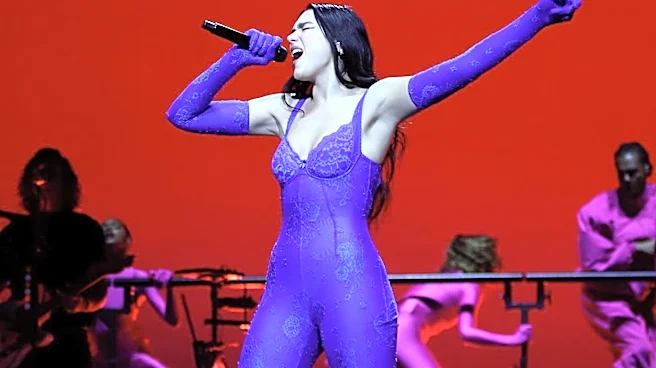
unannounced songs, often deep cuts or covers, during their shows. While intended to create unique experiences for each city, this practice has led to a 'Surprise Song Epidemic,' where the value of a concert is often judged by the specific surprise track played. Artists like Dua Lipa, for instance, have incorporated covers dedicated to the city they are performing in during her 'Radical Optimism' tour. This trend has transformed setlist variation into a spectacle, driven by fan competition and the desire for unique content.
Why It's Important?
This 'surprise song' trend significantly impacts the concert experience and the music industry's marketing strategies. For fans, it creates an added layer of anticipation and excitement, making each show feel potentially unique. However, it also fosters a sense of competition and potential disappointment if a desired song isn't played, leading to online debates about which cities received the 'best' surprise. For artists and their teams, it's a powerful tool for generating online buzz and virality, as surprise performances often lead to increased social media engagement and streaming bumps for the featured songs. This manufactured spontaneity, however, can also detract from the overall live experience, as the focus shifts from the planned set to the unexpected element, potentially devaluing the core performance.
What's Next?
The 'surprise song' trend is likely to continue evolving, with artists finding new ways to incorporate unexpected elements into their shows. There might be a push for more genuine, unplanned surprises rather than predictable slots, or artists might experiment with fan voting or interactive elements to select these songs. The industry will continue to monitor the impact of these surprises on ticket sales, fan engagement, and streaming numbers. As fans become more accustomed to the trend, artists may need to innovate further to maintain the element of 'surprise' and prevent it from becoming a routine expectation that leads to fan dissatisfaction. The balance between planned spectacle and authentic live performance will be a key consideration for future tours.
Beyond the Headlines
The 'surprise song epidemic' highlights deeper implications regarding authenticity and commercialization in live entertainment. While seemingly a fan-service gesture, it can be viewed as a calculated marketing strategy to create scarcity and urgency around concert tickets, driving demand and online discourse. The immediate online sharing of these surprise moments means that the 'surprise' is often short-lived and experienced by a global audience rather than just those present. This raises questions about the intimacy and uniqueness of live events in the digital age. The trend also reflects a broader cultural shift where experiences are increasingly curated for social media, and the value of an event is often measured by its shareability and viral potential, rather than solely by the in-person enjoyment.