



What's Happening?
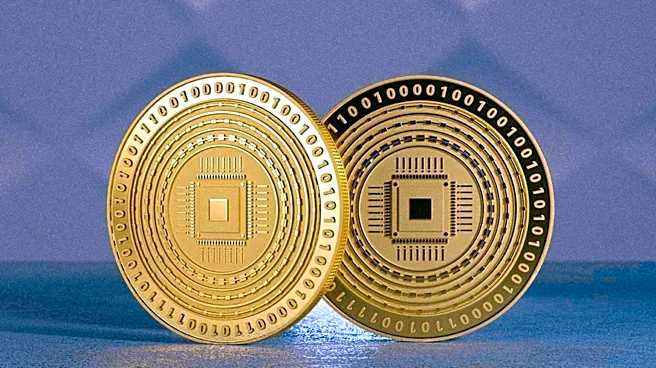
Dollar-backed stablecoins, such as USDT and USDC, are increasingly facilitating 24/7 cross-border payments, with approximately 20% of weekly stablecoin volume occurring during weekends when traditional banking systems are typically closed. This trend
highlights their emerging role as an 'always-on' layer for moving dollar liquidity across borders. USDC, in particular, has seen significant growth, now accounting for about 40% of stablecoin volume on platforms like Coins.ph, a Philippine crypto exchange. This shift is partly attributed to U.S. businesses and financial institutions utilizing USDC for overseas payouts. The broader stablecoin market, valued at around $312 billion, sees USD-backed tokens comprising approximately 97% of fiat-backed stablecoins. USDC maintains a 1:1 peg to the U.S. dollar, supported by reserves of cash and short-term U.S. Treasury bonds, and is widely adopted for transactions, decentralized finance (DeFi), and digital payments.
Why It's Important?
The rise of dollar-backed stablecoins as a 24/7 cross-border payment mechanism has significant implications for U.S. businesses and the global financial landscape. For U.S. companies engaged in international trade and remittances, stablecoins offer a solution to the limitations of traditional banking hours, enabling near-real-time settlement and potentially reducing transaction costs. This 'always-on' infrastructure can enhance operational efficiency and liquidity management for businesses with global operations. The increasing use of USDC by U.S. financial institutions for overseas payouts suggests a growing acceptance and integration of digital assets into conventional finance. While stablecoins are not expected to fully replace the global foreign exchange market, their ability to provide continuous access to dollar-denominated liquidity creates a parallel system that complements existing financial rails, particularly in emerging markets where local currencies may be volatile. This development could lead to more efficient and accessible financial services for a broader population, including overseas workers sending remittances.
What's Next?
The continued growth and adoption of dollar-backed stablecoins suggest several foreseeable developments. Regulatory frameworks around stablecoins are likely to evolve further, both in the U.S. and internationally, as governments and financial authorities seek to manage their risks and integrate them into the broader financial system. The increasing use of stablecoins for cross-border payments could prompt traditional financial institutions to explore similar 24/7 capabilities or integrate stablecoin technology into their offerings. We may also see further innovation in remittance solutions, with more companies leveraging stablecoins to offer faster and potentially cheaper international money transfers. As the market matures, there could be increased competition among stablecoin issuers, leading to enhanced transparency, security, and efficiency. The ongoing shift towards digital currencies will likely continue to influence how U.S. businesses conduct international transactions and manage their global finances.
Beyond the Headlines
The widespread adoption of dollar-backed stablecoins for 24/7 cross-border payments extends beyond mere transactional efficiency; it represents a fundamental shift in the architecture of global finance. This development challenges the traditional reliance on time-bound banking systems and introduces a new paradigm of continuous liquidity. Ethically, it raises questions about financial inclusion, as stablecoins can provide access to dollar-denominated assets for individuals and businesses in regions with unstable local currencies or limited access to conventional banking services. Legally, the regulatory landscape for stablecoins is still evolving, and their integration into existing financial laws will be crucial for their long-term stability and acceptance. Culturally, the increasing comfort with digital currencies for everyday transactions could accelerate the broader adoption of blockchain technology and decentralized finance. This shift could also influence the U.S. dollar's role as the global reserve currency, as its digital representation becomes more accessible and widely used across various blockchain networks, potentially solidifying its international standing in the digital age.