



What's Happening?
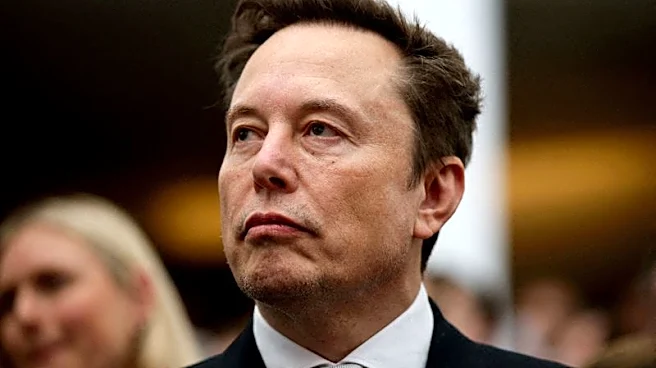
Preparations are actively underway for the upcoming Asia-Pacific Economic Cooperation (APEC) summit in Shenzhen. Reports indicate that President Trump will be accompanied by several U.S. executives, including Elon Musk, during his attendance. However,
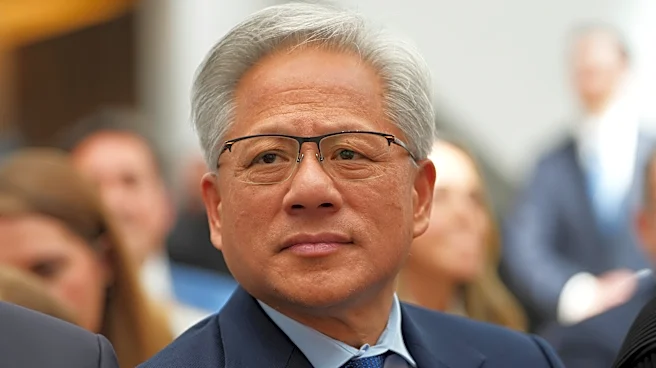
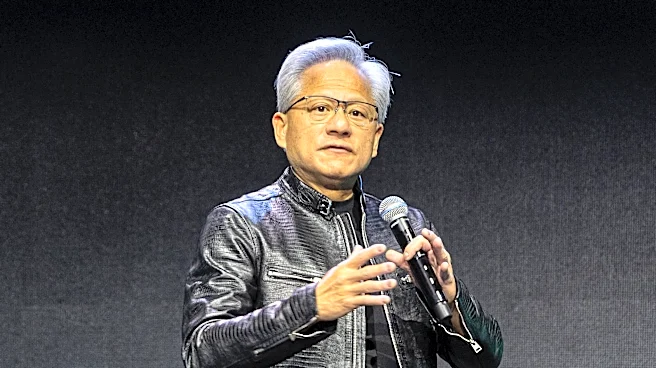
Jensen Huang will not be part of this trip. The summit is anticipated to focus on fostering constructive strategic stability between the U.S. and China, with potential announcements of deals through the U.S.-China Board of Investment. While specific details about the agenda remain somewhat quiet, the presence of prominent U.S. business leaders suggests an emphasis on economic and trade relations. Notably, there will be no meeting between Xi and Takaichi, with Takaichi being the only leader to experience this snub.
Why It's Important?
The APEC summit in Shenzhen holds significant importance for U.S. business and economic interests in the Asia-Pacific region. The presence of U.S. executives, particularly figures like Elon Musk, signals a strong intent to engage in high-level business discussions and potentially secure new trade and investment opportunities. For U.S. industries, any agreements or commitments made through the U.S.-China Board of Investment could open new markets, streamline operations, or address existing trade barriers. The focus on 'constructive strategic stability' suggests an effort to de-escalate trade tensions and foster a more predictable business environment, which is crucial for American companies operating in or looking to expand into China and other APEC economies. Conversely, a failure to achieve meaningful progress could perpetuate uncertainty and negatively impact U.S. economic stakeholders.
What's Next?
The immediate next step is the APEC summit itself, where President Trump and the accompanying U.S. executives will engage in discussions with their counterparts from other APEC economies, particularly China. These interactions are expected to explore avenues for enhancing strategic stability and potentially lead to the announcement of new business deals or investment initiatives. Following the summit, the focus will shift to the implementation of any agreements reached and the monitoring of their impact on U.S.-China economic relations. The presence of high-profile business leaders suggests that post-summit activities may include follow-up meetings and negotiations to solidify partnerships and explore further collaboration. The outcomes of these discussions will likely influence future trade policies and investment strategies for U.S. companies in the region.
Beyond the Headlines
The inclusion of prominent U.S. business leaders like Elon Musk in the APEC delegation goes beyond typical diplomatic protocol, signaling a strategic move to intertwine economic diplomacy with high-level political engagement. This approach suggests a recognition that economic ties are a critical component of broader strategic stability, particularly in the complex U.S.-China relationship. It also highlights the increasing role of private sector leaders in shaping international relations and trade policies. The absence of Jensen Huang, a key figure in the technology sector, could also carry subtle implications regarding specific industry-related sensitivities or ongoing trade dynamics. This blend of political and business leadership at such a significant forum underscores a shift towards a more integrated approach to foreign policy, where economic leverage and private sector innovation are seen as essential tools for achieving national objectives and fostering international cooperation.