







What's Happening?
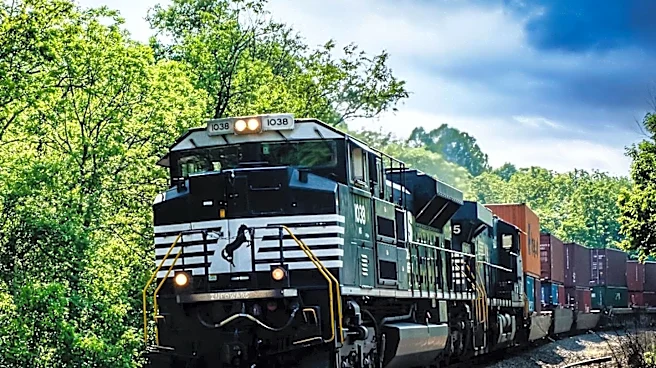
A new rail service has been launched to transport sawn timber from Malungsfors, Sweden, to the Port of Gothenburg, significantly boosting Swedish forest exports. The inaugural train, carrying timber from Swedish producer Fiskarheden, departed recently,
with its cargo destined for markets in Asia, the Middle East, and North Africa. Initially, trains will operate every other Monday, each transporting 44 40-foot containers. The service has the capacity for expansion should demand increase. Joakim Limberg, CEO of Fiskarheden, emphasized the company's preference for rail transport for inland freight and expressed satisfaction with the cost-effective and flexible solution developed by TFK Logistics, which is also open to other regional businesses. Approximately 90% of Fiskarheden's production is exported, with its sawn timber used in various applications, including furniture, construction, and concrete formwork. The company also sees potential to utilize the return journeys from Gothenburg to Dalarna for importing goods, further enhancing the service's value to local businesses. Richard Mellgren, Senior Business Development Manager at the Port of Gothenburg, highlighted the new rail service as an excellent example of Railport Scandinavia's offerings, providing inland exporters with an efficient route to international shipping.
Why It's Important?
This new rail service is important for several reasons, primarily its impact on the efficiency and sustainability of Swedish forest product exports. By shifting a significant portion of inland freight from road to rail, the initiative contributes to reduced carbon emissions and decreased road congestion, aligning with broader environmental goals. This move enhances the competitiveness of Swedish timber producers like Fiskarheden by providing a more cost-effective and reliable logistics solution for reaching international markets. The ability to export to diverse markets in Asia, the Middle East, and North Africa strengthens Sweden's position in the global timber trade and supports the national economy. Furthermore, the potential for the rail service to carry import cargo on return journeys creates a more efficient and economically viable two-way logistics corridor, benefiting a wider range of businesses in the region. This integrated approach to freight transport optimizes resource utilization and reduces overall supply chain costs. The collaboration between a major timber producer, a logistics provider, and a key port demonstrates a strategic effort to leverage infrastructure for economic growth and environmental responsibility. The expansion capability of the service also indicates a forward-looking approach, ready to adapt to increasing demand and further solidify Sweden's export capabilities.
What's Next?
The new rail service will continue its initial schedule of departures every other Monday, transporting 44 40-foot containers of sawn timber. Fiskarheden and TFK Logistics will likely monitor demand closely to determine when to expand the service, potentially increasing the frequency of trains or the number of containers per departure. Efforts will also focus on engaging other businesses in the region to utilize the service for both exports and, crucially, for importing goods on the return journeys from Gothenburg to Dalarna. This will maximize the efficiency and economic benefits of the rail link. The Port of Gothenburg will continue to promote Railport Scandinavia's capabilities to other inland exporters, aiming to attract more companies to utilize rail for international shipping. The success of this initiative could encourage similar rail-based logistics solutions for other industries and regions, further integrating sustainable transport methods into the supply chain. Long-term, the service is expected to strengthen Sweden's export infrastructure and contribute to the sustainable growth of its forest industry.
Beyond the Headlines
Beyond the immediate logistical and economic benefits, this new rail service highlights a broader trend towards integrating sustainable practices into global supply chains. The emphasis on shifting freight from road to rail reflects a growing awareness of environmental impact and the need for greener transportation solutions. This initiative could serve as a model for other countries and industries seeking to reduce their carbon footprint while maintaining or enhancing export competitiveness. The strategic partnership between a timber producer, a logistics company, and a port also underscores the importance of collaborative efforts in achieving complex sustainability goals. This kind of integrated approach can lead to innovations in freight management and infrastructure development. Furthermore, the service's design to accommodate import cargo on return trips exemplifies a circular economy principle, optimizing resource use and minimizing empty runs. This holistic view of logistics not only improves economic efficiency but also reduces the overall environmental burden of trade. The success of such initiatives can influence policy decisions and investment in rail infrastructure, promoting a more sustainable and resilient global trade network. It also demonstrates how specific industry needs can drive broader advancements in environmental and economic sustainability.