








What's Happening?
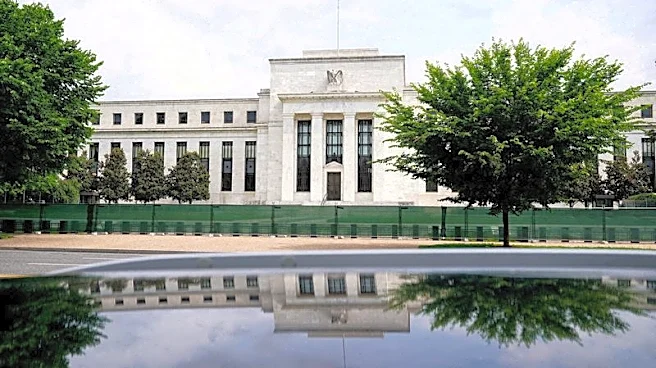
The Federal Reserve has decided to maintain the target range for the federal funds rate at 3.50% to 3.75% following a unanimous vote. Despite holding rates steady, the Fed signaled that persistent inflation could necessitate a rate hike later this year.
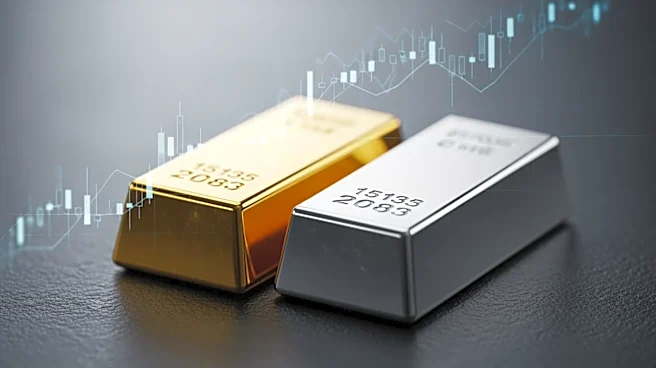
The decision comes as economic activity continues to expand at a solid pace, but inflation remains elevated, driven in part by energy-related supply shocks. The Fed's new projections indicate a median 2026 fed funds rate of 3.8%, an increase from the previous 3.4% forecast in March. This announcement has led to a significant market reaction, with spot gold and silver prices dropping sharply. Gold is trading at approximately $4,260.10 per ounce, down 1.65%, while silver is at $67.885, down 3.08%. The market's response reflects concerns over potential future rate hikes and their impact on real yields and the dollar.
Why It's Important?
The Federal Reserve's decision to hold rates steady while signaling potential future hikes underscores the ongoing challenge of managing inflation in the U.S. economy. This move has significant implications for various sectors, particularly commodities and equities. The drop in gold and silver prices highlights the sensitivity of these markets to interest rate expectations, as higher rates can increase the opportunity cost of holding non-yielding assets like precious metals. Additionally, the Fed's stance affects investor sentiment and market positioning, influencing broader financial markets. The potential for future rate hikes could lead to increased borrowing costs, impacting consumer spending and business investment. This decision also reflects the Fed's commitment to achieving its 2% inflation target, which is crucial for long-term economic stability.
What's Next?
Looking ahead, market participants will closely monitor upcoming economic data and Fed communications for further indications of future monetary policy actions. The possibility of a rate hike later this year will depend on inflation trends and economic conditions. Investors and businesses may need to adjust their strategies in anticipation of potential changes in interest rates. Additionally, the proposed U.S.-Iran interim agreement on the Strait of Hormuz, which could affect oil prices and inflation dynamics, will be a key factor to watch. The Fed's future decisions will likely continue to influence market volatility and economic outlooks.