







What's Happening?
A new study by the Illinois Economic Policy Institute (ILEPI) and the Project for Middle Class Renewal (PMCR) at the University of Illinois at Urbana-Champaign projects that data center investments in Illinois over the next decade will create more than
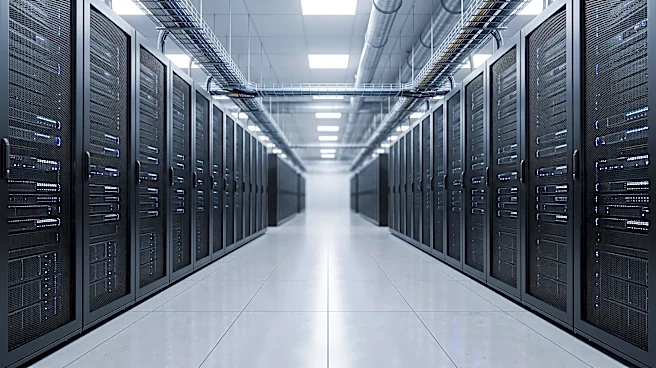
120,000 jobs, generate billions of dollars in economic activity, and contribute nearly $300 million annually in property tax revenues. Illinois is a top 10 state for data center development, with the Chicago area being the third-largest market in the U.S. Between 2020 and 2024, $16 billion was spent on construction, with an additional $57 billion planned. These facilities currently account for 7% of the state’s total electricity demand. The report also notes that while Illinois offers sales tax exemptions for data center equipment, Governor JB Pritzker suspended these exemptions in June.
Why It's Important?
The projected economic impact of data center investments in Illinois is substantial, promising significant job creation and a boost to the state's economy. The creation of over 120,000 jobs, including high-wage positions in construction and IT, will provide considerable opportunities for the workforce. The anticipated $300 million in annual property tax revenues will directly benefit local communities, particularly public schools, by providing a stable funding source. This growth positions Illinois as a key player in the national technology infrastructure, supporting cloud computing and artificial intelligence. However, the suspension of sales tax exemptions by Governor JB Pritzker introduces a policy shift that could influence future investment decisions and the competitiveness of Illinois in attracting new data center projects.
What's Next?
The report suggests that policy guardrails and project design standards can mitigate concerns regarding utility costs and other development impacts. Future policy discussions in Illinois will likely focus on balancing economic growth from data centers with environmental and infrastructure considerations. This includes exploring options such as requiring data centers to cover 100% of their new energy needs, incentivizing clean energy investments, and reforming sales tax exemptions to promote projects with stronger energy and environmental benchmarks. Additionally, there may be efforts to standardize water and air-cooling systems and improve public disclosure by banning non-disclosure agreements with elected officials to ensure transparency and responsible development.
Beyond the Headlines
The rapid expansion of data centers in Illinois highlights a broader national trend of increasing demand for digital infrastructure driven by cloud computing and artificial intelligence. This growth presents both immense economic opportunities and significant challenges, particularly concerning energy consumption and environmental impact. The debate over sales tax exemptions and the need for policy guardrails reflects a critical tension between fostering economic development and ensuring sustainable practices. The report's emphasis on high-wage job creation and property tax benefits for schools underscores how technological advancements can directly support local communities, while also raising questions about equitable access to these new opportunities and the long-term implications for energy grids and natural resources.