


What's Happening?
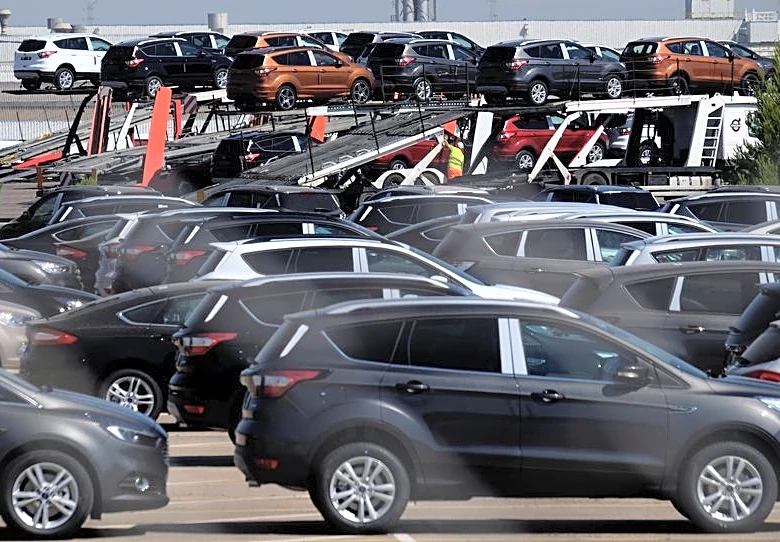
Ford and Geely have finalized a deal for Geely to take over part of Ford's Almussafes plant near Valencia, Spain. This agreement allows Geely to build vehicles on an idle assembly line at the factory, which has been operating at less than a quarter of its
capacity. The plant was once Ford's largest outside the U.S., with an annual capacity of up to 450,000 vehicles, but production has decreased significantly following the discontinuation of older models like the Mondeo and Galaxy. The deal follows months of speculation and discussions between the two companies about sharing technology and manufacturing costs. Geely plans to produce a European version of the Geely EX2, which is available in hybrid, plug-in hybrid, and battery-electric configurations.
Why It's Important?
The agreement between Ford and Geely is significant as it represents a strategic move for both companies. For Geely, manufacturing locally in Europe allows the company to classify its cars as EU-made, avoiding tariffs and import duties on Chinese-built electric vehicles. This move also accelerates market entry compared to building a new plant from scratch. For Ford, leasing the idle assembly line to Geely turns a restructuring cost into revenue and opens opportunities for co-developing cheaper hybrid and EV models using Geely's GEA architecture. This partnership reflects a broader trend of Chinese automakers acquiring existing European capacity to expand their presence in the region.
What's Next?
Spanish Prime Minister Pedro Sanchez is expected to announce the arrangement in person, highlighting the significance of the deal for Spain's automotive industry. The partnership may lead to further collaborations between Ford and Geely, potentially involving co-development of new vehicle models. Additionally, the deal could influence other Chinese automakers to pursue similar strategies in Europe, leveraging existing infrastructure to expedite production and market entry.
Beyond the Headlines
The Ford-Geely deal underscores a shift in Ford's strategy, as the company actively shares its manufacturing capacity with a Chinese rival. This collaboration reflects a pragmatic approach to utilizing idle assets and adapting to the competitive landscape in the automotive industry. The deal also highlights Spain's role as a welcoming host for foreign automakers, positioning itself as a key player in the European automotive sector despite lacking a domestic mass-market carmaker.