



What's Happening?
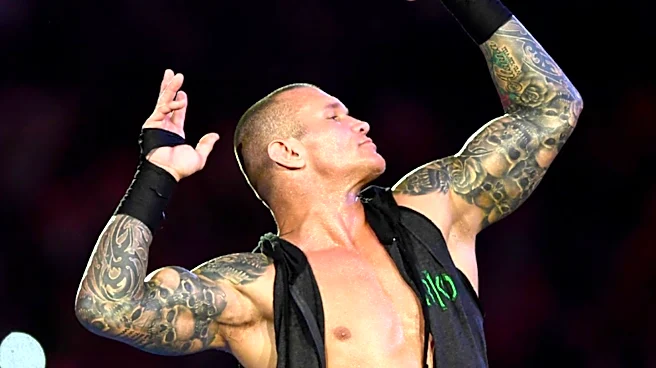
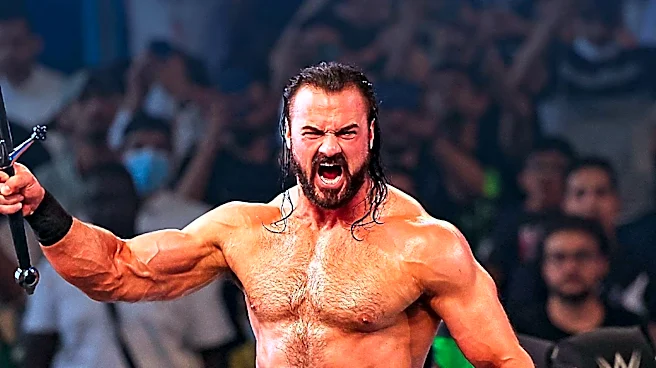
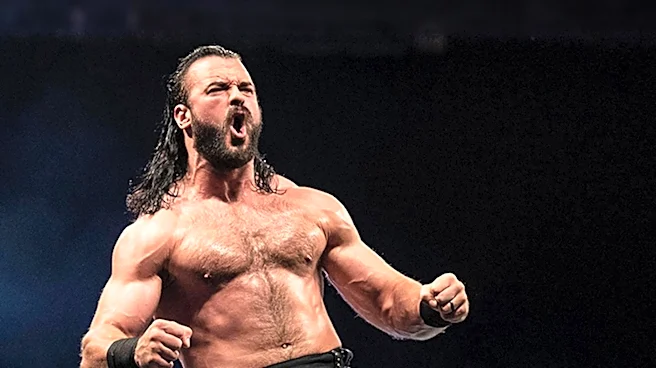
Drew McIntyre, a prominent WWE Superstar and 31st Triple Crown Champion, recently discussed a specific moment in his career he wishes he could retract: his fall from the Hell in a Cell structure during his 2020 match against Randy Orton for the WWE Championship.
Speaking on the 'What's Your Story? With Steph McMahon' podcast, McIntyre recalled the 10-foot drop, noting that he, at 6'7", did not like heights. The fall resulted in him hitting a table and biting through his tongue, describing the experience as 'horrendous.' Despite the pain, McIntyre acknowledged that the spot served the storyline, particularly due to Randy Orton's ability to capitalize on his selling of the bump, which added menace to the match's conclusion, deviating slightly from the original plan. McIntyre credits his training since 2025 for his current physical well-being, stating that the fall has not caused any permanent damage.
Why It's Important?
This reflection by Drew McIntyre offers a rare glimpse into the physical and narrative demands placed upon professional wrestlers, even at the highest levels of the WWE. It highlights the inherent risks involved in high-stakes matches like Hell in a Cell, where performers push their physical limits to create compelling entertainment. For fans, McIntyre's candidness demystifies some aspects of professional wrestling, revealing the genuine pain and strategic thinking behind seemingly spontaneous moments. For the wrestling industry, it underscores the ongoing balance between spectacle and performer safety. While the 'horrendous' fall contributed to a memorable storyline, it also serves as a reminder of the potential for serious injury, prompting continuous discussions about risk management and the well-being of athletes in a sport that blurs the lines between athletic competition and theatrical performance. The fact that McIntyre attributes his recovery to recent training also emphasizes the importance of physical conditioning in prolonging a wrestler's career.
What's Next?
While McIntyre has moved past this particular incident, his comments contribute to the ongoing dialogue within professional wrestling regarding performer safety and the evolution of match stipulations. As WWE continues to innovate and introduce new match types or intensify existing ones, the experiences shared by veterans like McIntyre will likely inform future decisions on how to balance entertainment value with the physical toll on athletes. Fans can expect McIntyre to continue his high-level performance, leveraging his experience to navigate future challenges in the ring. His focus on sustained training suggests a commitment to longevity, which could influence younger talent to prioritize similar rigorous conditioning. The discussion also subtly reinforces the narrative power of a well-executed, albeit painful, spot in shaping a wrestler's character and legacy.
Beyond the Headlines
McIntyre's account touches upon the psychological aspect of professional wrestling, where performers must not only endure physical pain but also maintain character and contribute to a larger narrative, even when things go awry. His acknowledgment of Orton's quick thinking to adapt the storyline based on his reaction to the fall illustrates the improvisational skill and chemistry required between top-tier wrestlers. This incident also subtly highlights the 'kayfabe' aspect of wrestling, where the line between reality and performance is intentionally blurred. While the pain was real, the purpose was to enhance the story. This dynamic is crucial to understanding the unique appeal of professional wrestling, where the authenticity of emotion and physical exertion is harnessed to tell a dramatic tale. The long-term impact of such high-risk maneuvers on wrestlers' bodies remains a significant, though often understated, concern within the industry.