


What's Happening?
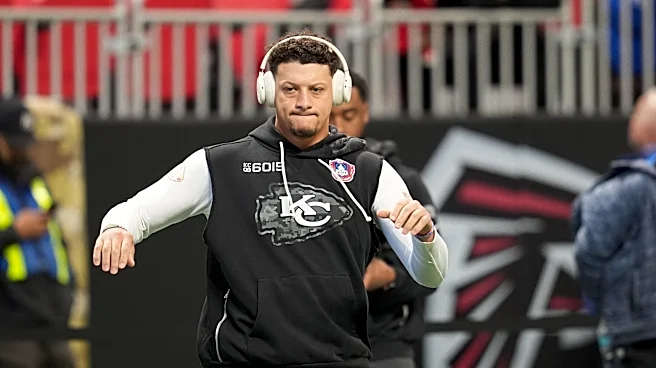
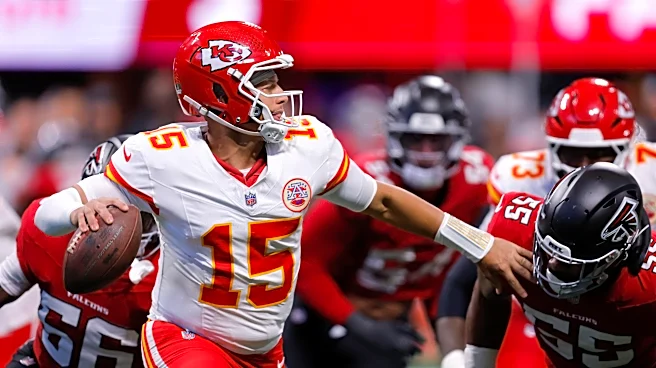
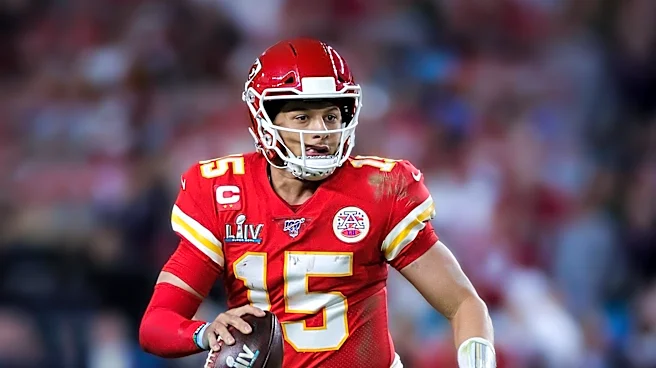
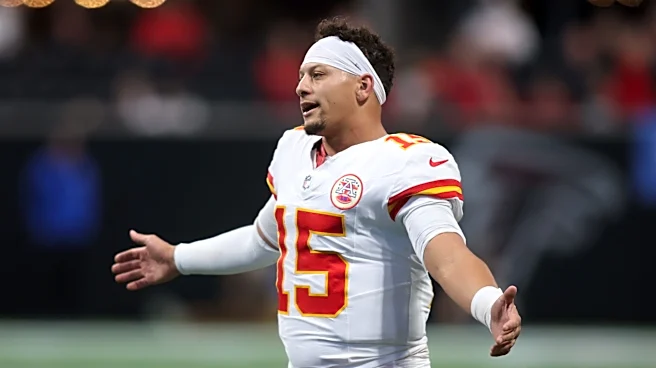
Kansas City Chiefs quarterback Patrick Mahomes is adjusting his playing style due to a knee injury, according to Jesse Newell of The Athletic. Mahomes is now running and scrambling less, with his scramble rate nearly halved and his lowest scramble percentage
since 2019. This shift has led to a reduction of approximately 1.88 points per game from expected points based on advanced metrics. Despite this, Mahomes is focusing on keeping his eyes downfield and playing within the pocket, believing it improves his overall game and maintains the offense's rhythm. His average time to throw has decreased to 2.58 seconds, compared to 2.69 seconds at the start of his career and 2.75 seconds last year. Mahomes acknowledges that his knee is improving and feels better after games, but he is also learning to be effective without constant movement, drawing parallels to how former New England Patriots quarterback Tom Brady adapted his game.
Why It's Important?
This adaptation by Patrick Mahomes is significant for the Kansas City Chiefs and the broader NFL. Mahomes' previous reliance on his athleticism and scrambling ability was a hallmark of his game, making him one of the most dynamic quarterbacks in the league. His shift to a more pocket-oriented style demonstrates a strategic evolution, potentially extending his career longevity by reducing physical strain. While the immediate impact includes a slight decrease in points from scrambles, his improved time to throw and focus on downfield reads could lead to a more refined and efficient passing game. This change could also influence how opposing defenses prepare for the Chiefs, forcing them to adjust their strategies from containing a mobile quarterback to defending a more traditional, yet still highly effective, pocket passer. The success of this adaptation will be closely watched, as it could set a precedent for how other athletic quarterbacks manage injuries and evolve their play.
What's Next?
The Kansas City Chiefs face upcoming challenging games against the Buffalo Bills and San Francisco 49ers, which will serve as crucial tests for Mahomes' adjusted playing style and his knee recovery. These high-stakes matchups will provide a clearer indication of how effectively Mahomes can lead the offense without relying as heavily on his mobility. His continued focus on faster throws and pocket presence will be under scrutiny, as the team aims to maintain its winning momentum against tougher opponents. The long-term implications for Mahomes' career will also be observed, as successful adaptation could solidify his status as a versatile and enduring quarterback, capable of winning in multiple ways. The team's coaching staff will likely continue to tailor offensive schemes to maximize his strengths within this new framework.
Beyond the Headlines
Mahomes' strategic shift highlights a broader trend in professional sports where athletes, particularly those in physically demanding roles, must adapt their game to prolong their careers and maintain peak performance after injuries. This evolution mirrors the career trajectory of other legendary athletes who transitioned from relying on raw athleticism to mastering more nuanced aspects of their sport. The mental fortitude required to embrace such a change, especially for a player known for his dynamic play, is considerable. It also underscores the importance of continuous skill development and strategic thinking in professional football. This adaptation could serve as a case study for future athletes facing similar challenges, demonstrating that sustained success often comes from evolving one's approach rather than rigidly adhering to past methods, ultimately influencing player development and coaching philosophies across the league.