








What's Happening?
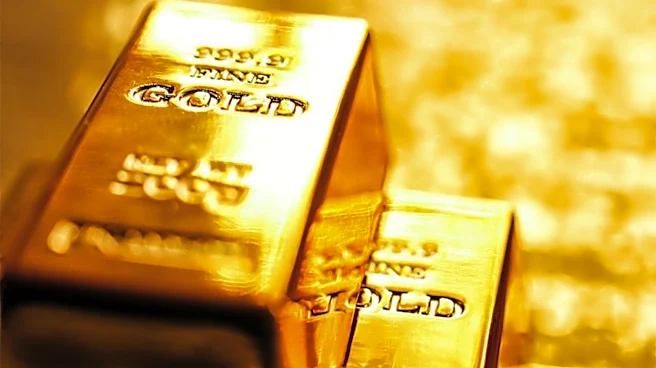
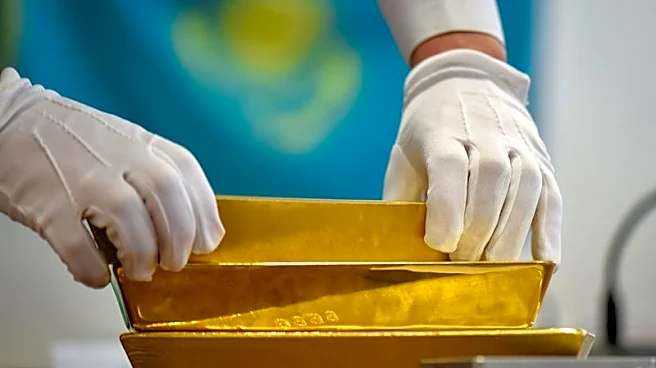
Gold prices experienced significant fluctuations this week as the market reacted to stronger U.S. economic data and rising expectations of Federal Reserve rate hikes. The week began with gold trading at $4,142.13 per ounce, reaching a high of $4,220.82
before a selloff pushed prices below $4,000. This decline was driven by a stronger U.S. dollar and increased rate-hike expectations. Despite a brief rebound due to geopolitical tensions and rising oil prices, gold ended the week around $4,100. Analysts remain divided on the future direction of gold prices, with some predicting further declines and others anticipating a rebound due to oversold conditions and potential geopolitical developments.
Why It's Important?
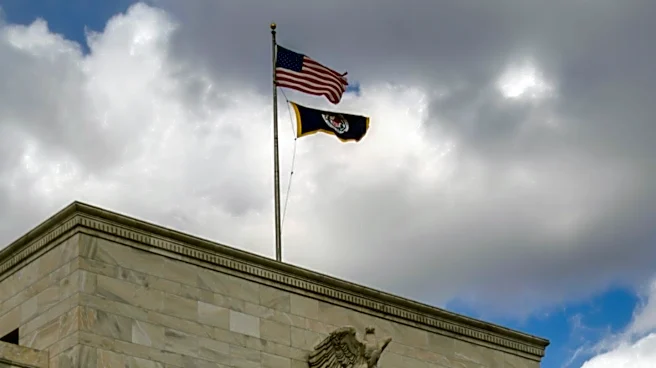
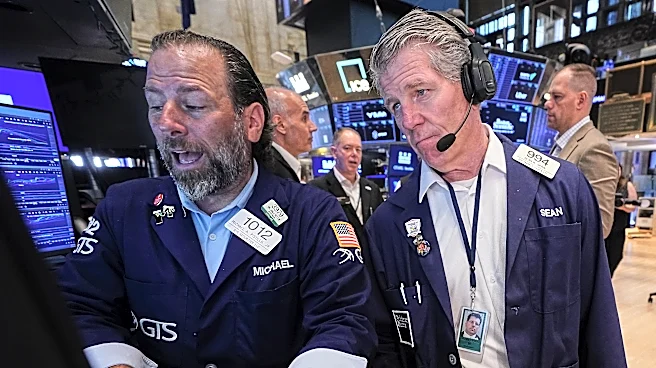
The fluctuations in gold prices highlight the ongoing uncertainty in global markets, influenced by U.S. monetary policy and geopolitical tensions. The Federal Reserve's hawkish stance, aimed at controlling inflation, has strengthened the U.S. dollar, impacting commodities like gold. This situation affects investors and central banks, which often turn to gold as a safe-haven asset during economic uncertainty. The market's response to U.S. economic indicators, such as employment data and inflation rates, will continue to influence gold prices. The outcome of these developments could have broader implications for global financial stability and investor confidence.
What's Next?
Looking ahead, market participants will closely monitor upcoming U.S. economic data, including employment reports and inflation indicators, which could influence the Federal Reserve's policy decisions. Analysts suggest that gold prices may continue to face pressure if the Fed maintains its hawkish stance. However, geopolitical tensions, particularly in the Strait of Hormuz, could provide support for gold as a safe-haven asset. Investors will also watch for any shifts in central bank policies or unexpected geopolitical events that could impact market dynamics and gold prices.