










What's Happening?
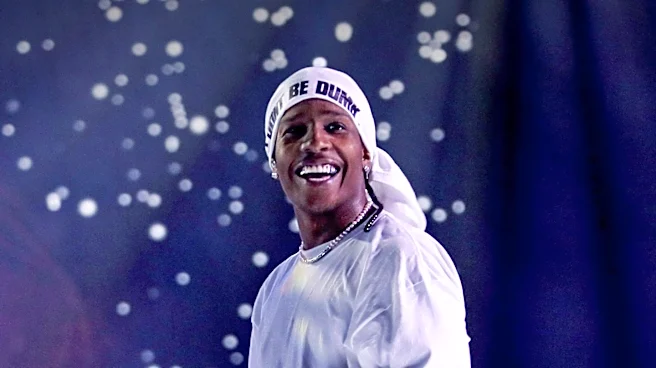
In a recent interview with Antonio Johri for Complex, A$AP Rocky shared his perspective on the use of artificial intelligence (AI) in music, stating a personal preference for "practically" creating music. While acknowledging that AI could be a useful
tool in certain contexts, such as isolating vocals from a track, Rocky indicated that he does not envision himself using the technology for his own creative process. He noted that artists who have used AI in their music, like Fenix Flexin and Tyga, have faced backlash. Rocky emphasized his commitment to working directly with musicians, producers, and beat makers to develop his sound, highlighting a traditional approach to music production. He also provided an update on the second disc of his album "Don't Be Dumb," which is expected to be released soon.
Why It's Important?
A$AP Rocky's stance on AI in music is significant as it reflects a growing debate within the entertainment industry regarding the role of technology in creative processes. As a prominent artist, his preference for practical, human-led music creation could influence other musicians and shape audience perceptions of AI-generated content. His comments highlight concerns about authenticity and the potential for backlash when artists utilize AI, suggesting a value placed on traditional artistry and human input. This perspective contributes to the ongoing discussion about the ethical and artistic implications of AI, particularly in fields where creativity and originality are highly valued. For the music industry, this indicates a potential divide between artists embracing new technologies and those who prioritize conventional methods, impacting future production trends and consumer expectations.
What's Next?
The ongoing discussion about AI in music is likely to continue, with artists and industry stakeholders further exploring its potential benefits and drawbacks. A$AP Rocky's clear preference for practical creation may encourage other artists to articulate their own positions, potentially leading to more defined industry standards or guidelines regarding AI usage. As AI technology advances, the debate will intensify, prompting questions about copyright, artistic integrity, and the definition of authorship in music. The release of the deluxe version of Rocky's album "Don't Be Dumb" will also be a focal point, as fans anticipate new music created through his preferred practical methods. This situation could also spur further innovation in traditional music production techniques as artists seek to differentiate their work from AI-generated content.
Beyond the Headlines
A$AP Rocky's comments delve into the deeper philosophical implications of technology's role in art. His emphasis on "practically" doing things speaks to the value of human effort, skill, and collaboration in the creative process, contrasting with the potentially automated nature of AI. This raises questions about what constitutes "art" in an age where machines can generate creative outputs. The "negative connotations" Rocky mentioned regarding AI use in music point to a broader societal discomfort with technology encroaching on traditionally human domains, particularly those associated with emotion and expression. This discussion extends beyond music, touching on ethical considerations across various creative industries and the long-term impact of AI on human creativity, labor, and the very definition of artistic merit. It underscores a cultural tension between technological advancement and the preservation of human-centric artistic practices.