






What's Happening?
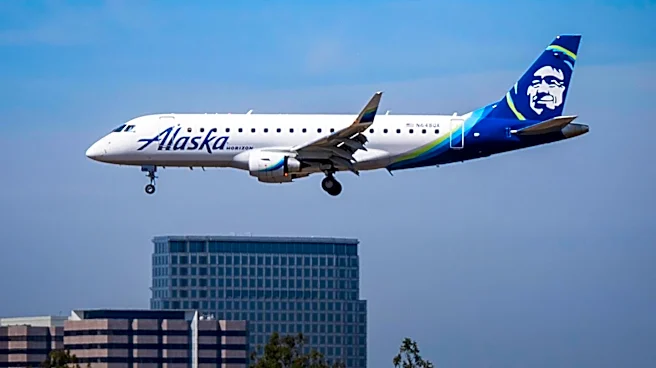
Alaska Air Group is set to eliminate approximately 200 non-union positions, including 125 in Washington state and 48 in Hawaii, as part of a cost-cutting initiative. This decision comes as the company faces significant financial pressures, primarily due
to escalating fuel expenses. Chief Executive Ben Minicucci informed employees in a memo that the airline could incur an adjusted pretax loss of up to $700 million this year if current conditions persist, marking its first such loss outside the pandemic since 2003. Minicucci emphasized the need to restore financial discipline, noting that overhead expenses have grown disproportionately to revenue in recent years. The job cuts affect less than 1% of Alaska Air's roughly 32,500 employees and do not include frontline, non-management roles. Affected employees will receive pay through December 31, along with severance and other support, with their last working day scheduled for November 13.
Why It's Important?
This workforce reduction by Alaska Air Group highlights the severe impact of rising fuel costs on the U.S. aviation industry. The potential $700 million loss underscores the financial vulnerability of airlines to external economic factors and geopolitical pressures. For the affected employees, particularly those in Washington and Hawaii, the layoffs represent a direct economic hardship, despite severance packages. The move also signals a broader trend of airlines re-evaluating their operational costs and staffing levels to maintain profitability in a challenging economic environment. This could lead to similar actions by other carriers facing comparable pressures, potentially impacting employment across the sector. The company's focus on returning to 'financial discipline' suggests a shift towards more conservative spending and operational efficiency, which could influence future investment and expansion plans within the airline industry.
What's Next?
Affected Alaska Air Group employees will have their last working day on November 13, with continued pay and benefits through December 31, along with severance. The company will likely continue to monitor fuel prices and global economic conditions closely to assess further operational adjustments. The broader aviation industry may see increased pressure to retire older narrowbody passenger jets as Airbus and Boeing ramp up production, potentially leading to a surplus of aircraft if passenger air traffic growth remains stagnant in key markets like the U.S. and China. This could prompt other airlines to consider similar cost-cutting measures or fleet optimization strategies to maintain market equilibrium and profitability. The focus on financial discipline by Alaska Air Group could set a precedent for how other U.S. airlines manage their expenses in the face of ongoing economic uncertainties.
Beyond the Headlines
The situation at Alaska Air Group reflects a deeper challenge within the U.S. aviation sector: the delicate balance between operational costs, revenue growth, and market demand. The disproportionate growth of overhead expenses relative to revenue, as noted by CEO Ben Minicucci, points to potential inefficiencies that may have accumulated during periods of more favorable economic conditions. This scenario could prompt a broader re-evaluation of business models across the industry, encouraging airlines to invest in more fuel-efficient aircraft and streamline their operations. Furthermore, the potential glut of narrowbody aircraft, as highlighted by industry analysts, suggests a looming oversupply that could depress aircraft values and lease rates, impacting manufacturers and leasing companies. This could also accelerate the retirement of older, less efficient planes, contributing to a modernization of airline fleets but also posing challenges for airlines with significant investments in older assets.