






What's Happening?
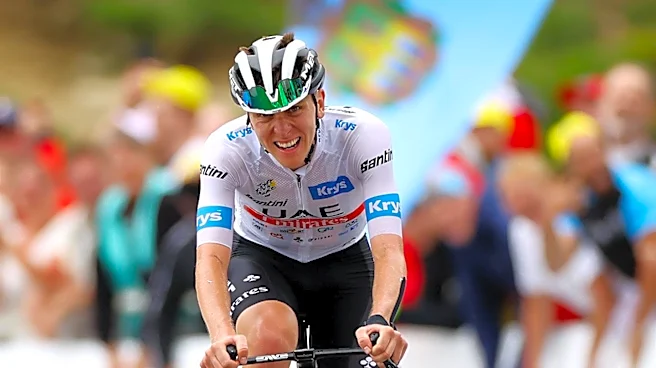
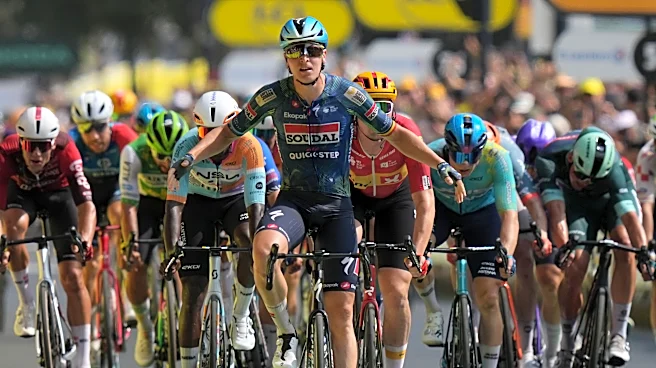
Tadej Pogačar, a prominent figure in professional cycling, has called for a significant change in the cycling calendar following the shortening of a Tour de France stage due to extreme heat. The ninth stage of the Tour, originally planned to cover a longer
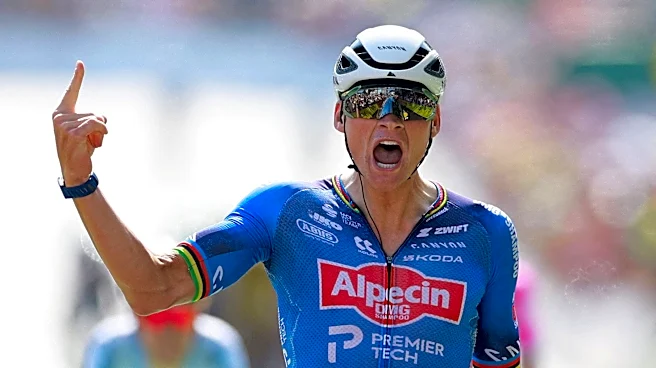
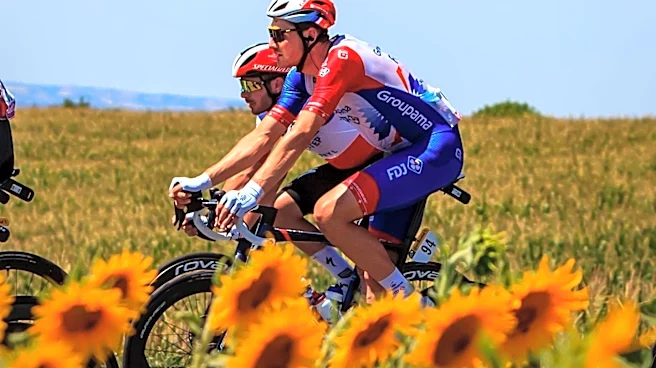
distance, was reduced by 30 kilometers as a result of a heatwave that led to a red alert in the Corrèze department by Météo-France. Pogačar suggested that races should not be held in July and August in hot regions, proposing an earlier start time for stages to avoid the peak heat. Despite the challenges, Mathieu van der Poel emerged victorious in the shortened stage, while other riders, including Tom Pidcock, noted the intense heat conditions. The Tour de France has implemented measures to protect riders and fans, such as relaxing rules on hydration and advising fans against attending certain stages due to wildfires.
Why It's Important?
The call for a revised cycling calendar by Tadej Pogačar highlights the growing impact of climate change on sports events, particularly those held outdoors. The extreme heat conditions faced during the Tour de France underscore the need for sports organizations to adapt to changing environmental conditions to ensure the safety and performance of athletes. This situation also raises broader questions about the sustainability of traditional sports schedules in the face of global warming. The potential changes to the cycling calendar could affect the planning and logistics of major cycling events, impacting teams, sponsors, and host cities. Additionally, the health and safety of athletes are paramount, and adapting to these conditions is crucial for the future of competitive cycling.
What's Next?
As the Tour de France continues, discussions around the cycling calendar and race conditions are likely to intensify. Stakeholders, including cycling teams, event organizers, and governing bodies like the UCI, may need to consider Pogačar's suggestions and explore feasible adjustments to the calendar. This could involve rescheduling races to cooler months or altering start times to mitigate heat exposure. The ongoing dialogue may also prompt other sports to reevaluate their schedules in response to climate challenges. The Tour de France's current measures, such as increased hydration opportunities and advising against fan attendance in certain areas, may serve as a model for future events facing similar environmental challenges.