








What's Happening?
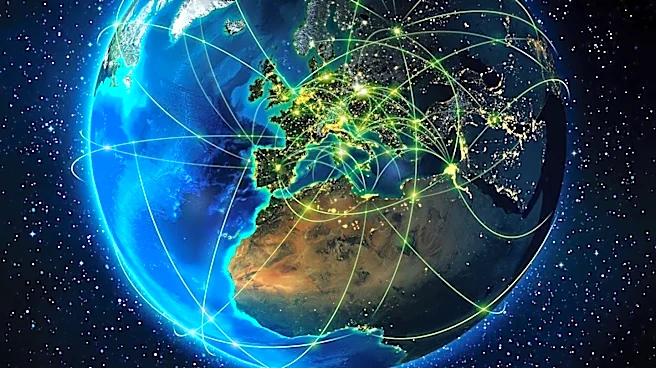
A recent study by Dr. Yong Chen and Giuliano Bianchi from EHL Hospitality Business School has mapped the global tourist destination network, revealing a 'big-world' phenomenon that contrasts with the 'small-world' theory often applied to social networks.
Using hotel reservation data from Booking.com, the study analyzed 217,686 distinct trips across 39,901 cities in 195 countries. The research found that while the network is highly connected and concentrated around hub cities, it exhibits exceedingly long diameters, meaning tourists often make 14 to 25 stops to reach a randomly chosen city. This suggests that tourists actively seek diverse and geographically distinct destinations, rather than minimizing connections.
Why It's Important?
This research provides critical insights for the U.S. hospitality and tourism industries. Understanding the 'invisible footprint' of global travel allows businesses to better anticipate tourist flows and adapt their strategies. For U.S. cities, recognizing their role as either hub cities or peripheral destinations within this 'big-world' network can inform marketing efforts, infrastructure development, and partnership opportunities. For example, cities identified as hubs might focus on seamless transit and diverse offerings, while peripheral destinations could highlight unique cultural or natural attractions to appeal to travelers seeking novelty. This understanding can lead to more effective resource allocation and enhanced visitor experiences, ultimately impacting the economic vitality of tourist-dependent regions across the U.S.
What's Next?
The findings will likely prompt U.S. tourism boards, hotel chains, and travel agencies to re-evaluate their understanding of traveler behavior and destination connectivity. Future strategies may involve developing more integrated travel packages that cater to multi-destination itineraries, fostering collaborations between geographically distinct cities, and investing in data analytics to track evolving travel patterns. The study's emphasis on the 'big-world' phenomenon suggests a need to promote not just individual destinations but also the unique sequences and combinations of experiences that travelers seek. This could lead to innovative marketing campaigns that highlight extended journeys and diverse regional offerings, rather than solely focusing on single-city visits.
Beyond the Headlines
The 'big-world' phenomenon in global travel challenges conventional network theories and highlights a fundamental aspect of human psychology in tourism: the desire for novelty and diverse experiences. Unlike social networks where minimizing connections (the 'small-world' effect) facilitates information flow and builds trust, tourists actively seek to maximize their exposure to different places. This has deeper implications for cultural exchange and global understanding, as it suggests a widespread inclination to explore and engage with varied cultures and environments. For the U.S., this means that promoting a rich tapestry of experiences across its diverse regions, from bustling metropolises to serene natural parks, can resonate strongly with international travelers seeking an expansive and enriching journey, fostering greater cross-cultural appreciation and economic benefits.