





What's Happening?
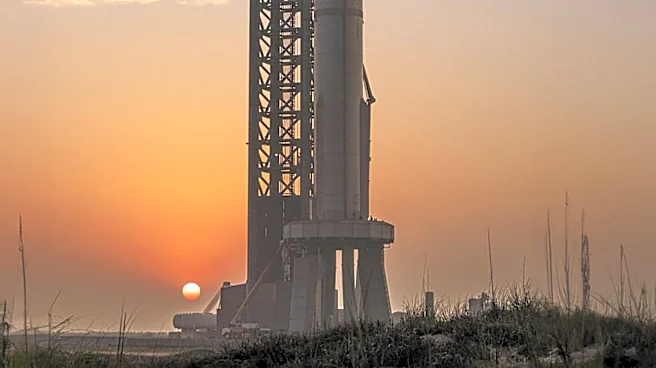
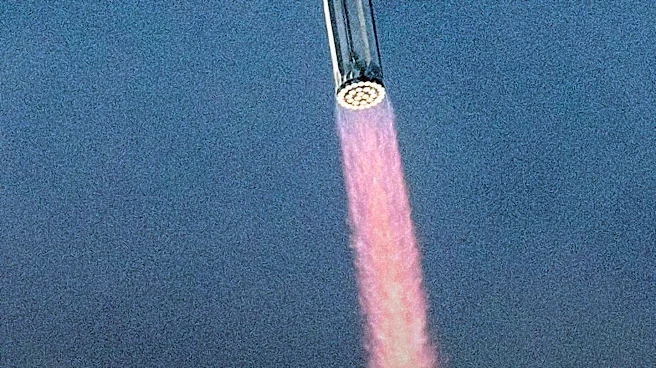
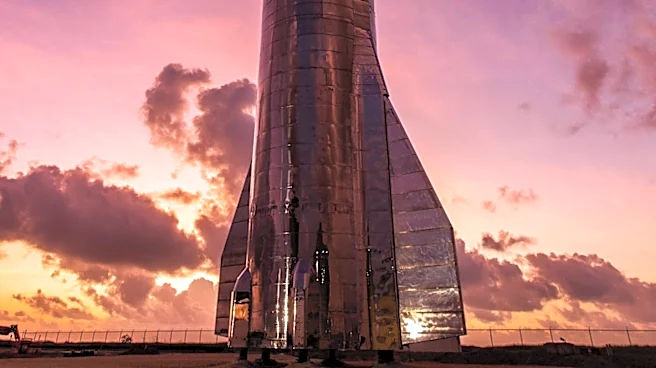
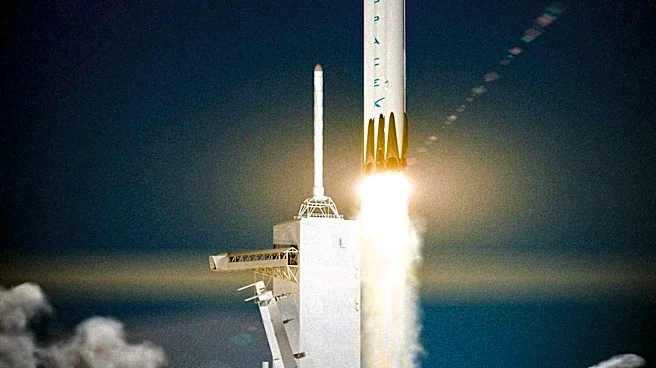
SpaceX is set to conduct the 13th test flight of its Starship rocket, the world's most powerful rocket, from its facility in Starbase, Texas. The launch, scheduled for July 16, 2026, will feature the second iteration of the 'Version 3' (V3) Starship,
which includes significant design upgrades. These upgrades make the rocket taller, increase its propellant capacity, and reduce mass around the engine section due to improved avionics systems. The V3 Starship is equipped with 33 upgraded Raptor 3 engines on the Super Heavy booster and six on the Ship. The test aims to advance the rocket's development towards official operation, with a focus on its reusability and propellant transfer capabilities. NASA is closely monitoring the progress, as SpaceX is contracted to develop a lunar lander version of Starship for the Artemis program.
Why It's Important?
The successful development and testing of SpaceX's Starship are crucial for NASA's Artemis program, which aims to return humans to the moon. The ability of the Starship to manage cryogenic fuels and perform propellant transfers is essential for its certification to carry astronauts. The outcome of Flight 13 will influence future missions, including Artemis III, which is planned for 2027. This mission will involve docking with NASA's Orion spacecraft in Earth orbit before proceeding to the moon. The advancements in Starship's design and capabilities could significantly impact the future of space exploration, offering a reusable and efficient vehicle for deep space missions.
What's Next?
Following the test flight, SpaceX plans to conduct further demonstrations to prepare for the Artemis III mission. The performance of the Starship during Flight 13 will be critical in addressing previous issues encountered during Flight 12, such as the Super Heavy's steering challenges and the Ship's engine relighting problems. If successful, the test will pave the way for subsequent launches and the eventual deployment of a lunar lander version of Starship. The results will also inform NASA's decision-making regarding the vehicle's readiness for crewed missions.