






What's Happening?
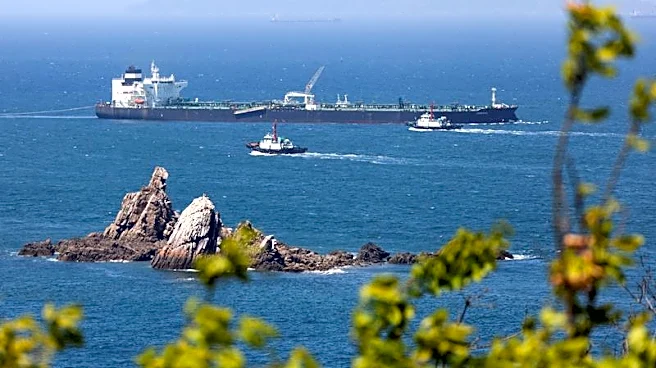
The reopening of the Strait of Hormuz has led to increased ship traffic, sending more oil into the global market. This development comes as the US and Iran continue negotiations, and the war in the region winds down. According to JPMorgan commodity strategists,
this influx of oil could pose a problem for the market, which currently does not require the additional supply. China's significant reduction in oil imports has contributed to this situation, as the country was previously a major buyer, helping to stabilize prices during periods of oversupply.
Why It's Important?
The reopening of the Strait of Hormuz and the subsequent increase in oil supply could lead to a temporary glut in the market. This situation is critical as it may affect global oil prices and the economic stability of oil-producing nations. The reduced demand from China, a key player in the global oil market, exacerbates the issue, potentially leading to price volatility. The situation highlights the interconnectedness of global markets and the impact of geopolitical events on economic conditions. Stakeholders in the oil industry, including producers and investors, must navigate these challenges to maintain market balance.
What's Next?
The oil market is expected to undergo adjustments as it absorbs the increased supply. Chinese refiners may eventually reenter the market, and countries that depleted their reserves might begin replenishing stocks, which could stabilize prices. However, these adjustments may take time, and the market will need to evaluate the supply-demand dynamics into 2027. The International Energy Agency predicts a decline in world oil demand by 1.1 million barrels per day in 2026, suggesting a potential supply overhang. Stakeholders will be closely watching these developments to adapt their strategies accordingly.