




What's Happening?
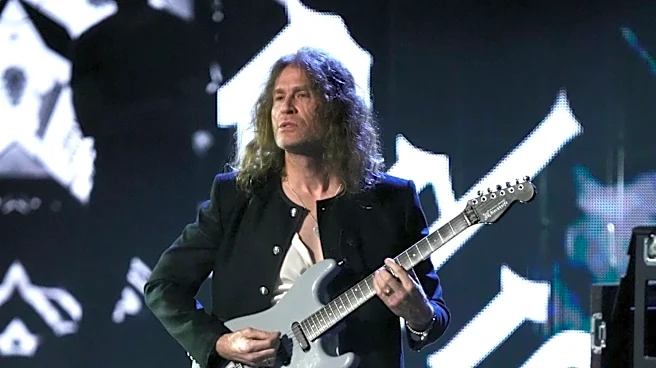
Dave Keuning, co-founder and guitarist of the rock band The Killers, recently revealed he suffered a major stroke. The 50-year-old musician experienced a blood clot in his brain that cut off blood supply to the entire right side of his brain. Upon arrival
at the hospital, Keuning was blind in one eye and had lost function on his left side. Doctors initially gave him a 40% chance of survival and predicted he would have disabilities. However, Keuning has made a remarkable recovery, stating on Instagram that he can play guitar "just as good as before." He credited his wife's quick actions for getting him to the hospital in time for surgery, which he believes saved his life and prevented long-term disabilities. The Killers are known for their hit song 'Mr. Brightside' and have achieved significant success, including four NME Awards, a BRIT Award, and seven Grammy nominations, with all seven of their albums topping the UK Albums Chart.
Why It's Important?
This event highlights the critical importance of rapid response and medical intervention in stroke cases. Keuning's survival and full recovery, despite initial grim prognoses, underscore advancements in emergency medical care and neurosurgery. For the music industry and fans of The Killers, Keuning's health scare could have had significant implications for the band's future performances and recordings. His ability to return to playing guitar without impairment ensures the continuity of his musical contributions and the band's artistic output. The story also serves as a public awareness message about stroke symptoms and the necessity of immediate medical attention, potentially encouraging others to act quickly in similar situations, which can drastically improve outcomes for stroke victims across the U.S.
What's Next?
Following his recovery, Dave Keuning is expected to continue his musical career with The Killers. His public announcement of the stroke and subsequent recovery may lead to increased awareness campaigns about stroke prevention and early detection, potentially involving Keuning himself. The band's upcoming schedules and potential new music releases will likely proceed as planned, given Keuning's assurance of his full playing ability. This personal health journey could also inspire new creative works or themes within his music, reflecting on his near-death experience and gratitude for life. Fans and the music community will likely continue to offer support and celebrate his resilience, reinforcing the strong bond between artists and their audience.
Beyond the Headlines
Keuning's experience transcends a mere health update; it delves into the psychological and emotional impact of a life-threatening event on an individual and their family. His gratitude towards his wife, son, daughter, and bandmates suggests a deepened appreciation for personal relationships and the support network crucial during crises. The immediate concern for his ability to play guitar upon waking from surgery speaks to the profound connection artists have with their craft, viewing it not just as a profession but as an integral part of their identity and recovery. This narrative offers a powerful testament to human resilience and the capacity for recovery, even after severe medical emergencies, potentially fostering a broader conversation about mental and emotional well-being alongside physical health in high-pressure professions like music.