






What's Happening?
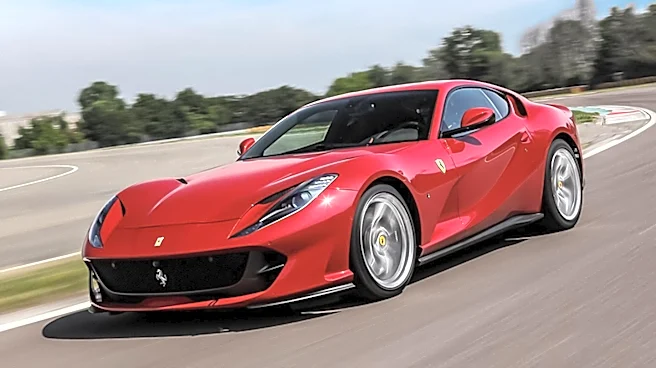
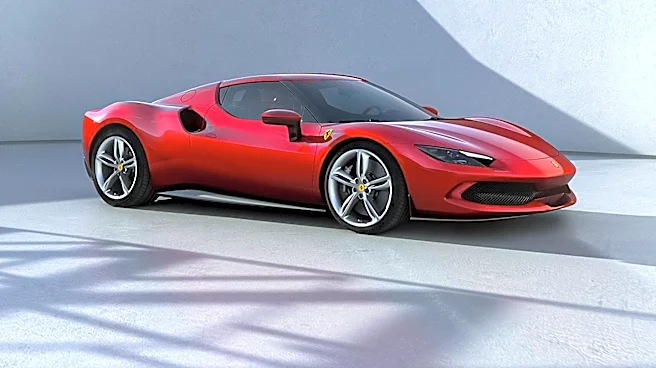
The Ferrari Amalfi, described as the evolution of the California model, is challenging traditional enthusiast views on entry-level supercars. Despite having 631 horsepower, a reviewer found the Amalfi to be a delightful and highly usable Ferrari, even
preferring it over some higher-end models. This perspective contrasts with a common belief among car enthusiasts that 'more is better' and that only the most expensive or powerful models offer the true supercar experience. The article suggests that marketing strategies often contribute to this misconception, leading enthusiasts to overlook the capabilities and enjoyment offered by less powerful, entry-level vehicles across various automotive segments, including supercars and off-roaders. The Amalfi demonstrates that a Ferrari can be both accessible and thoroughly Italian without needing extreme horsepower figures.
Why It's Important?
This shift in perception regarding entry-level supercars like the Ferrari Amalfi has significant implications for the automotive industry and consumer behavior. For manufacturers, it highlights the potential to broaden their market appeal by emphasizing usability and driving pleasure in their 'entry-level' offerings, rather than solely focusing on raw power or exclusivity. This could lead to a re-evaluation of marketing strategies, moving away from the 'more is better' narrative. For consumers, particularly in the U.S. market, it encourages a more nuanced understanding of vehicle performance and value, suggesting that satisfaction can be found in cars that are not necessarily the most expensive or powerful. This could influence purchasing decisions, potentially increasing demand for more practical yet still high-performance vehicles, and challenging the notion that status is solely tied to top-tier models.
What's Next?
The positive reception of models like the Ferrari Amalfi could prompt other luxury and performance car manufacturers to invest more in developing and promoting their entry-level or more 'usable' models. This might lead to a trend where brands focus on a broader spectrum of driving experiences, catering to those who seek daily drivability alongside performance. We may see more emphasis on the 'fun-to-drive' factor and practical aspects in marketing campaigns, rather than just horsepower figures. This could also encourage a more diverse range of automotive reviews and enthusiast discussions, moving beyond simple power comparisons to explore the overall driving experience and value proposition of different models. Ultimately, this could lead to a more inclusive and varied high-performance automotive landscape.
Beyond the Headlines
The discussion around the Ferrari Amalfi touches upon a deeper cultural and psychological aspect of consumerism: the pursuit of the 'best' or 'most' as a measure of value and status. This phenomenon extends beyond cars to many luxury goods and even everyday products. The article subtly critiques how marketing can shape desires, often leading consumers to believe that only the top-tier product can deliver satisfaction. By highlighting the enjoyment derived from a less extreme, yet still high-performance, vehicle, it challenges the inherent assumption that maximum specifications equate to maximum fulfillment. This could spark a broader conversation about mindful consumption and finding value in suitability and personal enjoyment rather than purely in perceived status or raw metrics, potentially influencing how consumers approach purchases across various industries.