


What's Happening?
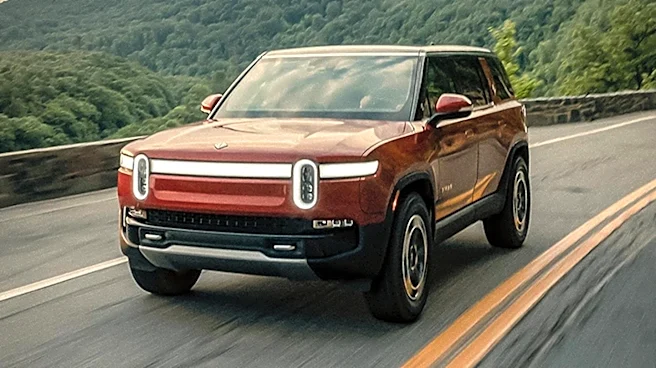
Rivian Automotive is actively working to improve its 'hands-free' driving technology to compete with Tesla's offerings, according to a report by CNBC's Michael Wayland. This initiative focuses on advancing the autonomous driving features in Rivian vehicles
while maintaining stringent safety protocols. The company's efforts come as the electric vehicle market continues to evolve, with consumer interest growing in advanced driver-assistance systems. The comparison between Rivian's and Tesla's systems highlights a competitive landscape where both innovation and safety are paramount. This development is part of a broader trend in the automotive industry to integrate more sophisticated autonomous functionalities into production vehicles, aiming to enhance convenience and potentially reduce driver fatigue.
Why It's Important?
This development is significant for the U.S. automotive industry, particularly within the electric vehicle sector. Rivian's push to improve its 'hands-free' capabilities directly impacts its competitive standing against market leader Tesla. Enhanced autonomous features could attract a wider customer base, potentially increasing Rivian's market share and revenue. For consumers, advancements in 'hands-free' technology offer the promise of safer and more comfortable driving experiences, though the reliability and safety of these systems remain a key concern. The emphasis on maintaining extra safety precautions by Rivian is crucial for building consumer trust and avoiding potential regulatory scrutiny. This competition also drives innovation across the industry, pushing other manufacturers to develop and refine their own autonomous driving solutions, ultimately benefiting the entire EV ecosystem.
What's Next?
Rivian will likely continue to refine and test its 'hands-free' driving systems, with potential software updates and new hardware integrations expected in future vehicle models. The company's progress will be closely watched by both consumers and competitors, as the performance and safety of these systems could significantly influence purchasing decisions and market trends. Regulatory bodies may also increase their oversight of autonomous driving technologies, potentially leading to new standards or guidelines that manufacturers like Rivian will need to adhere to. The ongoing competition with Tesla in this area suggests a continuous cycle of innovation, with both companies striving to offer the most advanced and safest autonomous driving experiences to their customers.
Beyond the Headlines
The pursuit of advanced 'hands-free' driving capabilities by companies like Rivian raises deeper questions about the future of human-machine interaction in transportation. As vehicles become more autonomous, the role of the driver shifts, leading to discussions about driver responsibility, liability in accidents, and the psychological impact of relinquishing control to artificial intelligence. There are also ethical considerations regarding the decision-making processes of autonomous systems, especially in complex or unavoidable accident scenarios. The development of these technologies could also reshape urban planning, infrastructure, and even the concept of vehicle ownership, potentially leading to more widespread adoption of ride-sharing services and a reduction in privately owned vehicles. The balance between technological advancement and human safety will remain a critical challenge for the industry.