
What's Happening?
Actress Goldie Hawn, at 81, has shared insights into her consistent strength and resistance training routine, which she credits for maintaining her physical health and changing her body over decades. Hawn revealed
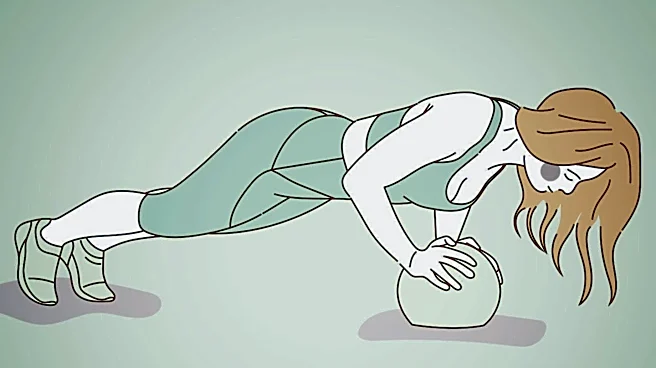
on the 'Khloé in Wonder Land' podcast that she has been lifting weights for 50 years, emphasizing its critical role in strengthening bones and building muscle. She incorporates weight training every other day. In addition to weightlifting, Hawn performs a 90-second plank daily. She describes the plank as a full-body, compound exercise that engages multiple muscle groups, including obliques, hips, back, shoulders, and core. Hawn also mentioned her long-standing practice of Pilates, which she started as a ballet dancer before it became widely known, noting its benefits for mobility, flexibility, active strength, and balance. Her routine also includes varied activities such as rebounding, walking, and dancing, aligning with recent studies suggesting that diverse exercise routines are linked to a lower risk of early death.
Why It's Important?
Goldie Hawn's dedication to strength training at her age highlights the significant benefits of consistent physical activity for longevity and overall health, particularly for women. Her emphasis on weightlifting reinforces scientific findings that resistance training is crucial for bone density, muscle mass preservation, and injury prevention, especially as individuals age. A recent study involving over 5,000 women aged 63-99 linked greater muscular strength to a significantly lower risk of death, supporting Hawn's long-held practice. Her routine serves as an example that strength training is accessible and beneficial at any age, promoting optimal aging. The inclusion of Pilates further underscores the importance of mobility and flexibility alongside strength, contributing to a holistic approach to fitness. Hawn's public sharing of her routine can inspire others to adopt similar practices, potentially leading to improved public health outcomes by encouraging more individuals to engage in regular strength and resistance training.
What's Next?
As public figures like Goldie Hawn continue to share their fitness journeys, there may be an increased public interest in strength training and holistic wellness approaches for older adults. This could lead to a greater demand for fitness programs tailored to seniors, emphasizing weightlifting, Pilates, and varied physical activities. Health and fitness professionals might draw inspiration from such testimonials to promote the benefits of consistent, diverse exercise routines. Furthermore, the ongoing research into the long-term benefits of strength training will likely continue to reinforce the importance of these practices, potentially influencing public health guidelines and recommendations for physical activity across different age groups. The visibility of active seniors like Hawn can help challenge ageist stereotypes about physical capabilities and encourage a more proactive approach to health and fitness throughout life.
Beyond the Headlines
Goldie Hawn's story transcends a simple fitness routine; it speaks to a broader cultural shift towards embracing active aging and challenging traditional notions of what it means to be older. Her commitment to physical well-being reflects a growing understanding that health is not merely the absence of disease but a proactive pursuit of vitality. This narrative contributes to a positive body image movement for older individuals, emphasizing strength and capability over youth-centric ideals. Ethically, her transparency about her routine promotes a realistic view of the effort required for sustained health, moving away from quick-fix solutions. Culturally, it reinforces the idea that consistent self-care, including physical exercise, is a lifelong endeavor that yields profound benefits, influencing how society perceives and supports healthy aging. Her example also subtly highlights the importance of finding enjoyable and sustainable forms of exercise, as her varied activities suggest a personalized and adaptable approach to fitness.