

What's Happening?
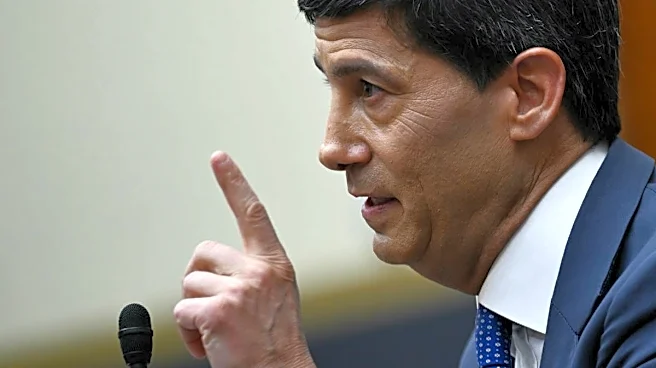
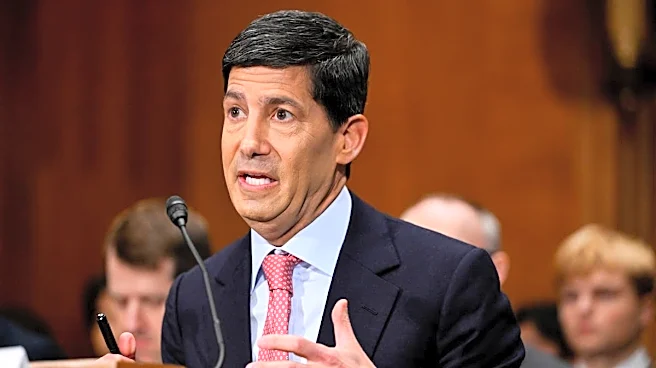
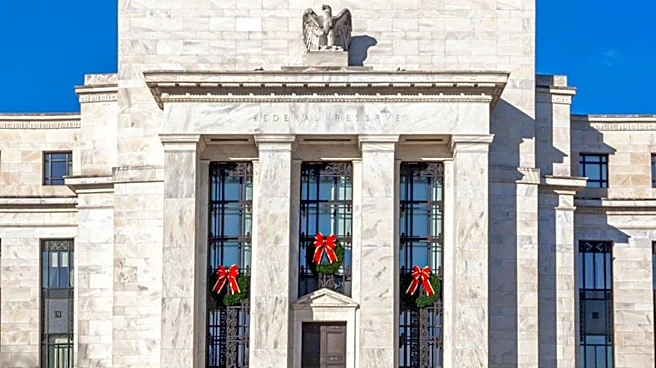
The Federal Reserve has commenced a two-day meeting to decide on interest rate policy, with significant uncertainty surrounding the outcome. Fed Chairman Kevin Warsh has emphasized the need for flexibility in policy decisions, leading to a 'family fight'
among committee members. The market is divided, with a 40% chance of a rate hike and a 60% chance of rates remaining unchanged. The decision is complicated by rising inflation, driven by geopolitical tensions, particularly the war with Iran. The Fed's mandate to maintain price stability and maximum employment is at the forefront of discussions.
Why It's Important?
The Fed's decision on interest rates is critical for the U.S. economy, impacting everything from consumer borrowing costs to business investment. A rate hike could help curb inflation but may also slow economic growth. The uncertainty reflects broader economic challenges, including geopolitical tensions and fluctuating oil prices. The Fed's approach will influence market confidence and economic stability, with potential implications for the housing market and broader financial conditions.
What's Next?
The Fed's decision will be closely watched by investors and policymakers. A rate hike could lead to higher borrowing costs and impact consumer spending and business investment. The Fed's communication will be key in managing market expectations and ensuring economic stability. The outcome of the meeting will also influence future policy decisions and the Fed's approach to managing inflation and economic growth.