





What's Happening?
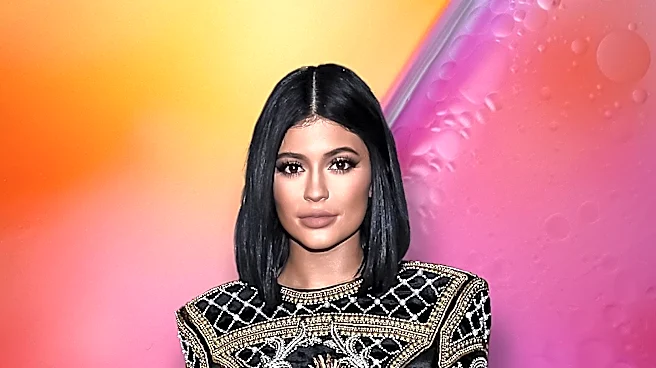
Kylie Jenner, the 29-year-old cosmetics magnate, has once again addressed the controversy surrounding her 'self-made' billionaire status. In an interview with Who What Wear, Jenner stated that 'None of the money I’ve ever made is inherited, so it’s technically
true,' acknowledging that her privileged upbringing provided significant opportunities. She admitted that this topic often causes controversy. Forbes initially named her the youngest self-made billionaire in 2019, attributing her wealth to her cosmetics brand, Kylie Cosmetics, launched in 2015. However, Forbes later stripped her of this title in May 2020, alleging that her family provided forged tax documents to inflate her status and adjusting her net worth estimate. Jenner denied these accusations, with her lawyer calling the allegations 'unequivocally false.' Forbes currently estimates her net worth at $670 million, maintaining that founding a company qualifies an individual as self-made, regardless of family wealth.
Why It's Important?
The ongoing debate surrounding Kylie Jenner's 'self-made' status highlights broader discussions about wealth, privilege, and the definition of success in American society. Her case brings into question the criteria used to define 'self-made' and whether a privileged background, even without direct inheritance of wealth, provides an unfair advantage. This conversation resonates with public sentiment regarding economic inequality and the perception of fairness in wealth accumulation. For the business world, it underscores the power of branding and social media influence in building successful enterprises, even if the initial platform is inherited. The controversy also impacts public perception of Forbes' methodology for wealth assessment and the credibility of such titles. It forces a re-evaluation of what it truly means to achieve success independently in an era where celebrity and inherited platforms play a significant role.
What's Next?
Kylie Jenner is expected to continue focusing on her cosmetics line, which she describes as her primary project and a source of continuous learning. The public discourse around her 'self-made' status is likely to persist, especially given the ongoing scrutiny of wealth and privilege in the media. Forbes will likely continue to refine its methodologies for assessing net worth and defining 'self-made' individuals, potentially influencing how other entrepreneurs from affluent backgrounds are categorized. This ongoing conversation could also lead to increased transparency demands for financial disclosures from public figures and businesses. For Jenner, maintaining the success and growth of Kylie Cosmetics will be crucial in solidifying her business legacy, irrespective of the 'self-made' label.
Beyond the Headlines
The 'self-made' controversy surrounding Kylie Jenner delves into the cultural narrative of the American Dream and the perception of meritocracy. It challenges the idea that success is solely a result of individual effort, prompting a deeper examination of how inherited social capital, connections, and early exposure to business environments contribute to entrepreneurial ventures. The debate also reflects a generational shift in how wealth is accumulated and perceived, with social media and personal branding playing an increasingly significant role. Ethically, it raises questions about authenticity and transparency in public figures' narratives of success. The long-term implication is a potential redefinition of what constitutes 'self-made' in a society where the lines between inherited advantage and earned success are increasingly blurred, influencing how future generations view and pursue wealth.