



What's Happening?
The Los Angeles Lakers have been under scrutiny for their offseason moves, particularly the trade for center Walker Kessler, which involved significant draft capital. Despite this, the team is working to maintain financial flexibility for future player
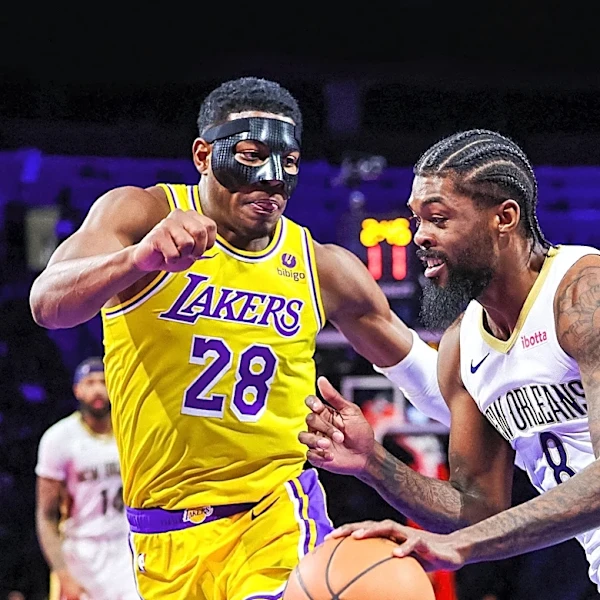
acquisitions. Key to this strategy are the contract adjustments made by players Austin Reaves and Sandro Mamukelashvili. Reaves agreed to a four-year, $180 million deal, slightly less than the initially reported $185 million, to help the Lakers stay under financial thresholds. Similarly, Mamukelashvili signed a four-year, $52 million contract with a structured salary that decreases in the second year, further aiding the team's financial strategy. These adjustments are aimed at allowing the Lakers to utilize the non-taxpayer mid-level exception next summer, potentially enabling them to acquire a high-level bench or starting player.
Why It's Important?
The financial maneuvers by Reaves and Mamukelashvili are crucial for the Lakers as they navigate the NBA's complex salary cap rules. By adjusting their contracts, these players are providing the team with the flexibility needed to remain competitive in the league. This could allow the Lakers to strengthen their roster without exceeding salary cap limits, which is vital for maintaining a competitive edge. The ability to use the non-taxpayer mid-level exception could be a game-changer, enabling the acquisition of impactful players without compromising future financial stability. This strategy reflects a broader trend in the NBA where teams must balance immediate competitiveness with long-term financial health.
What's Next?
Looking ahead, the Lakers will likely focus on strategic acquisitions that align with their financial goals. The use of the non-taxpayer mid-level exception next summer will be a key opportunity for the team to bolster their lineup. The Lakers' management will need to carefully evaluate potential players who can be signed or traded for within the constraints of this exception. Additionally, the team's performance in the upcoming season will influence their strategy, as success or failure could dictate further adjustments in their approach to player contracts and acquisitions.