









What's Happening?
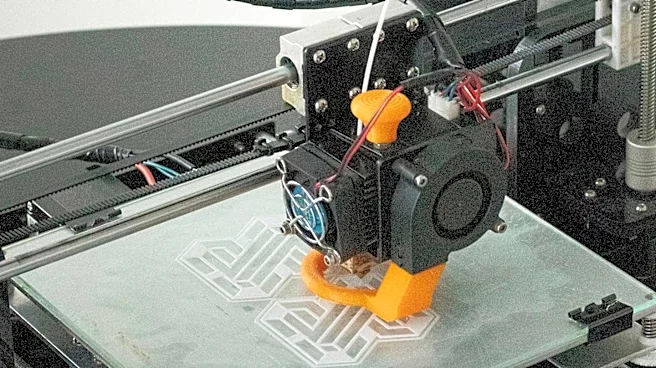
AMPERA, an advanced energy technology company, has announced the completion of the first full-scale, 3D-printed nuclear reactor module. This development marks a significant milestone in nuclear manufacturing, as the company aims to revolutionize the industry
with factory-built, mass-produced nuclear energy solutions. The reactor module was unveiled at AMPERA's innovation center in Palm Beach Gardens, Florida, with over 100 attendees, including local officials and business leaders. The reactor features a 3D-printed silicon carbide core and pressure vessel, designed for a lifespan of up to 30 years without refueling. AMPERA's systems are fueled with tri-structural isotropic (TRISO) thorium kernels, emphasizing safety and stability by design. The company has also established an Australian subsidiary to secure thorium supply and support U.S. advanced nuclear fuel production.
Why It's Important?
The introduction of 3D-printed nuclear reactor modules by AMPERA represents a transformative step in the nuclear energy sector. This innovation could significantly reduce production costs and time, making nuclear energy more accessible and scalable. The ability to mass-produce these reactors could meet the growing energy demands of various sectors, including AI data centers, defense, and industrial applications. By leveraging advanced manufacturing techniques, AMPERA aims to provide a reliable and efficient energy source, potentially reducing reliance on fossil fuels and contributing to cleaner energy solutions. This development aligns with global efforts to transition to sustainable energy sources and could position the U.S. as a leader in advanced nuclear technology.
What's Next?
AMPERA plans to continue its 'Power Now. Nuclear Next.' strategy, focusing on the deployment of its modular nuclear systems. The company aims to industrialize factory-built nuclear power with near-term deployment timelines, targeting markets with high energy demands. As AMPERA advances its technology, it will likely seek regulatory approvals and partnerships to facilitate the widespread adoption of its nuclear solutions. The success of this initiative could prompt other companies to explore similar manufacturing techniques, potentially leading to a broader shift in the nuclear energy landscape.