







What's Happening?
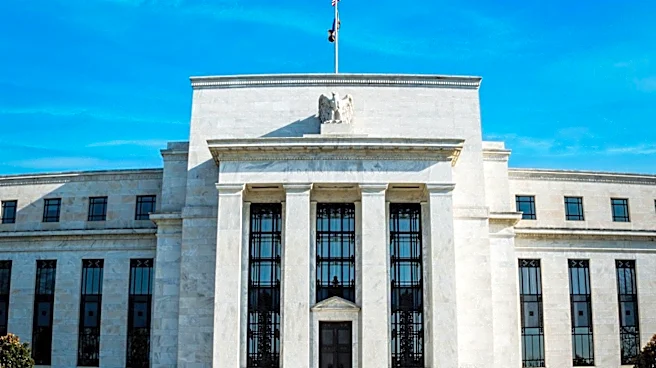
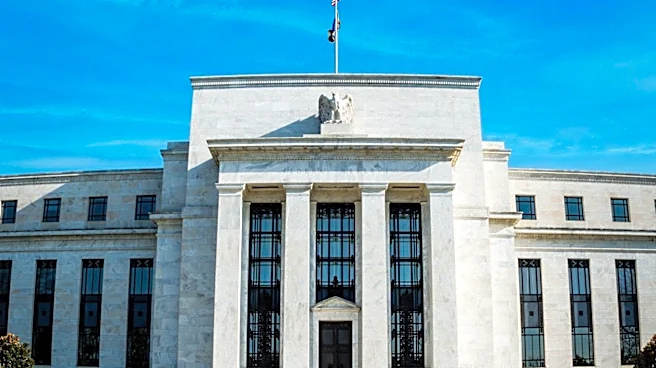
The Federal Reserve's latest Financial Stability Report has identified artificial intelligence (AI) as the leading risk to financial stability. The report highlights several potential threats to the U.S. financial system, including elevated stock valuations,
growing corporate debt, and the booming data center industry. It specifically links the overvaluation observed in U.S. equities to the widespread enthusiasm surrounding AI. Additionally, the report notes a rise in cybersecurity risks. Vice Chair Philip Jefferson, speaking at UC San Diego, indicated that 40 to 50 percent of working adults utilize generative AI in their jobs, and approximately a quarter of U.S. firms employ AI in at least one business function, a figure that climbs to about 40 percent in knowledge-intensive sectors. However, Jefferson stated it is premature to determine AI's role in recent productivity growth.
Why It's Important?
This report is crucial for the U.S. economy and financial markets as it signals a significant shift in how the Federal Reserve perceives emerging risks. By flagging AI as a top concern, the Fed is drawing attention to the potential for technological advancements to introduce new forms of systemic risk, beyond traditional economic indicators. The link between AI enthusiasm and elevated stock valuations suggests a speculative bubble, which, if it bursts, could have broad repercussions across U.S. equity markets, impacting investors, pension funds, and corporate balance sheets. The mention of growing corporate debt and the data center boom as threats further underscores the interconnectedness of technological investment with financial leverage. For policymakers, this report provides a mandate to consider regulatory frameworks and oversight mechanisms for AI's integration into finance, aiming to mitigate potential instability before it escalates. Businesses, particularly those heavily invested in AI, will need to be mindful of these warnings and potential regulatory responses.
What's Next?
The Federal Reserve's identification of AI as a top financial stability risk is likely to prompt increased scrutiny and discussion among financial regulators and policymakers. This could lead to the development of new guidelines or regulations aimed at managing the risks associated with AI in the financial sector, potentially impacting how U.S. firms develop, deploy, and utilize AI technologies. The report's concerns about elevated stock valuations tied to AI enthusiasm may also influence investor behavior, potentially leading to a more cautious approach to AI-related investments. Furthermore, the emphasis on cybersecurity risks suggests that financial institutions will face heightened pressure to bolster their defenses against AI-driven threats. Vice Chair Jefferson's ongoing assessment of AI's impact on productivity indicates that the Fed will continue to monitor this area closely, which could inform future monetary policy decisions and economic forecasts.
Beyond the Headlines
The Federal Reserve's report delves into the deeper implications of AI's rapid integration into the U.S. economy. Beyond immediate financial risks, the widespread adoption of AI raises fundamental questions about the future of work, economic inequality, and the concentration of power within the tech sector. The report's observation that 40-50% of working adults use generative AI highlights a significant societal shift, potentially leading to job displacement in some sectors while creating new opportunities in others. This transformation could exacerbate existing economic disparities if not managed carefully. Ethically, the reliance on AI in financial decision-making raises concerns about transparency, accountability, and potential biases embedded in algorithms. The 'data center boom' also points to the environmental impact of AI, given the immense energy consumption required for these facilities. Addressing these multifaceted challenges will require a holistic approach involving not just financial regulators but also policymakers across various sectors, aiming to harness AI's benefits while mitigating its broader societal and economic costs.