








What's Happening?
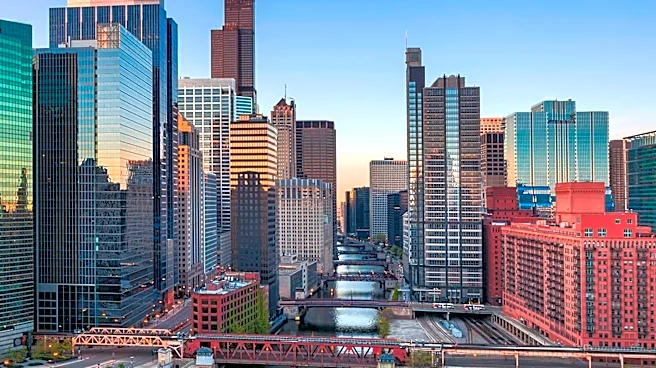
Chicago has undergone a significant transformation over the past 25 years, evolving from a traditional industrial and financial center, often associated with the 'Rust Belt,' into a dynamic and diverse innovation ecosystem. This shift is detailed by Tom
Kuczmarski, co-founder of Chicago Innovation, and Luke Tanen, president and CEO of Chicago Innovation. Historically, Chicago was not recognized as an innovation leader, with attention focused on areas like Silicon Valley. However, the city has cultivated a robust support network for entrepreneurs, addressing previous scarcities in venture capital and commercialization pathways for university research. Key to this transformation has been the establishment of world-class incubators such as mHUB, MATTER, 1871, The Garage at Northwestern, and the University of Chicago’s Polsky Center, many of which are now nationally recognized. This growth has attracted large corporations to relocate their headquarters from suburban areas to the city, seeking proximity to this burgeoning entrepreneurial energy. Research institutions like Argonne National Laboratory and Fermilab are also actively supporting commercialization efforts, further solidifying Chicago's position as an innovation hub.
Why It's Important?
This transformation is important because it demonstrates a successful model for urban reinvention, moving away from reliance on traditional industries to embrace a knowledge-based economy. For the U.S. economy, Chicago's emergence as an innovation center diversifies the national landscape of technological and entrepreneurial hubs, reducing concentration risks and fostering broader economic resilience. Investors are increasingly recognizing Chicago as a source of high-growth companies and breakthrough technologies, leading to the creation of new venture capital funds within the city. The success of Chicago Innovation award winners, with 77 companies acquired for over $159 billion, highlights the significant economic value generated by this innovation. This shift benefits not only the local economy through job creation and investment but also contributes to national competitiveness in emerging fields. The collaborative environment, involving businesses, universities, non-profits, and government agencies, serves as a blueprint for other cities looking to foster innovation and economic growth.
What's Next?
Chicago is poised to continue its growth in innovation, particularly in defining technologies for the next 25 years, including advanced manufacturing, life sciences, energy innovation, climate technology, and agriculture. These fields align naturally with Chicago's existing strengths, such as its world-class universities, diverse economy, transportation infrastructure, and deep talent pool. A significant initiative is the Illinois Quantum & Microelectronics Park, which is transforming the former U.S. Steel South Works site into a major hub for quantum computing with substantial public investment and partnerships with companies like IBM and PsiQuantum. This project positions Chicago as an early leader in the quantum race, with potentially enormous economic impact. The city's commitment to inclusive innovation, ensuring opportunities are accessible to diverse backgrounds, will also be crucial for sustained progress. Future developments will likely see continued collaboration among stakeholders to tackle complex challenges and further integrate innovation into all sectors of the city's economy.
Beyond the Headlines
The deeper implications of Chicago's transformation extend beyond economic metrics, touching upon urban planning, social equity, and the very definition of a 'modern city.' The emphasis on inclusive innovation, as exemplified by the Obama Presidential Center's principle that inclusion leads to progress, suggests a conscious effort to ensure that the benefits of this growth are widely distributed. This approach challenges the traditional model of innovation hubs, which have sometimes been criticized for exacerbating inequality. Furthermore, the shift from a 'Rust Belt' identity to an innovation center reflects a broader cultural and psychological change within the city, fostering a sense of dynamism and forward-thinking. The collaboration between diverse institutions—from universities to corporations and government—highlights a model of collective action that could be vital for addressing complex societal challenges. This long-term shift could redefine how cities leverage their unique assets to create sustainable and equitable growth in an increasingly technology-driven world.