







What's Happening?
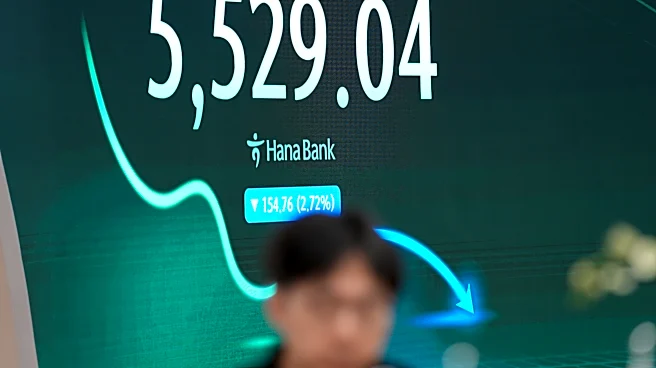
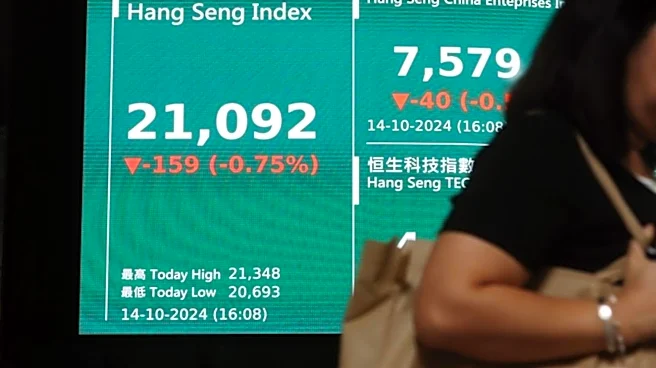
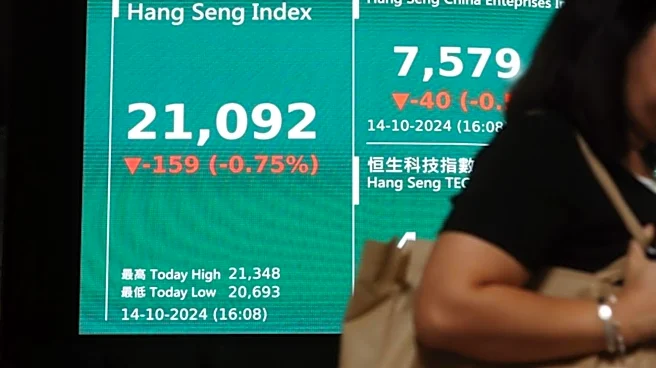
China and Hong Kong stock markets experienced declines on Friday, mirroring a broader global tech selloff led by Nasdaq. The Hang Seng Index in Hong Kong fell by 1.3 percent, while the Hang Seng Tech Index slid by 1.8 percent. China's blue-chip CSI 300
Index dropped 1.4 percent, and the Shanghai Composite Index fell 1.1 percent. This downturn was fueled by investor concerns that a potential Democratic sweep in the U.S. midterm elections could lead to increased scrutiny of the AI sector, impacting tech valuations. Chinese AI hardware stocks with significant exposure to the U.S. market were particularly affected, with Zhongji Innolight slumping 9.2 percent and Eoptolink Technology tanking 7.3 percent. Despite the daily losses, both the Hang Seng Index and the Shanghai Composite Index registered weekly gains, breaking previous losing streaks, partly due to bargain hunting and Beijing's market-supporting measures.
Why It's Important?
The global tech selloff, originating from the U.S. market, highlights the interconnectedness of international financial markets and the significant influence of U.S. tech performance on global investor sentiment. For U.S. investors and the broader economy, this event underscores the fragility of market confidence, particularly concerning the AI sector. Fears of increased regulatory scrutiny in the U.S. could dampen investor enthusiasm for AI companies, potentially leading to a re-evaluation of valuations across the tech industry. The impact on Chinese companies with U.S. market exposure also illustrates the vulnerability of global supply chains and the potential for political developments in one country to ripple across international markets. While Beijing's market support measures provided some cushion, the event suggests that domestic policies may not fully insulate markets from external shocks, especially when investor sentiment is driven by concerns about the sustainability of major tech trends like the AI boom.
What's Next?
The immediate future will likely see continued volatility in tech stocks, particularly if concerns about U.S. regulatory scrutiny on AI persist or intensify. Investors will closely monitor the outcomes of the U.S. midterm elections for any indications of policy shifts that could affect the tech sector. The performance of U.S. tech giants will remain a key indicator for global tech markets, including those in China and Hong Kong. Chinese authorities may continue to implement market-supporting measures to stabilize their domestic markets, but their effectiveness in countering global trends remains to be seen. Companies with significant U.S. market exposure, especially in AI hardware, may face ongoing pressure. Analysts will be watching for signs of whether the AI-driven rally is losing steam globally or if this is a temporary correction, which will influence investment strategies in the tech sector worldwide.
Beyond the Headlines
This market reaction points to a deeper underlying concern about the sustainability and potential overvaluation of the AI sector. The 'AI boom' has driven significant market gains, and any perceived threat to its growth trajectory, whether from regulatory intervention or economic shifts, can trigger widespread selloffs. This event also highlights the ongoing economic interdependence between the U.S. and China, particularly in the technology sector, despite geopolitical tensions. The performance of Chinese AI companies being heavily influenced by U.S. market sentiment underscores the global nature of technological innovation and investment. Furthermore, the discussion around whether the U.S. AI market is a 'bubble' reflects broader anxieties about market cycles and the potential for rapid corrections in high-growth sectors. This could lead to a more cautious approach from investors, potentially shifting capital towards more established or less volatile industries, or prompting a re-evaluation of risk in tech portfolios.